A cigarette looks simple in the hand, but getting there involves a genuinely long chain of agricultural, chemical, and mechanical steps, most of which never cross a smoker’s mind. This guide walks through that full chain, from the tobacco field to the finished, packed product, with the level of detail tobacco industry professionals actually need rather than a surface-level summary.
Every stage in that chain, cultivation, curing, blending, rod formation, filter attachment, and packing, has a direct effect on the final product’s consistency and quality. Understanding where each stage can go wrong, and what machinery exists to prevent that, is what separates a factory that hits its quality targets from one that’s constantly firefighting.

Manufacturing starts long before a factory is involved, with growing and harvesting the tobacco plant itself. Producing high-quality leaf requires specific soil conditions, the right climate, and farming techniques suited to the tobacco variety being grown, whether that’s Virginia, Burley, or Oriental.
Farmers prepare the soil and sow seeds that grow into mature plants over several months. Timing the harvest matters more than it might seem: leaves picked too early or too late shift both flavor and nicotine content, which is why experienced growers judge maturity leaf by leaf rather than harvesting an entire field at once. Once picked, the leaves go through initial processing to remove debris and impurities before curing begins.

After harvesting, tobacco moves through curing, fermentation, and blending, each of which shapes the leaf’s final character in a different way. Curing dries the leaves using air, fire, flue, or sun-curing methods, and the technique chosen has a real impact on the tobacco’s eventual color, aroma, and burn characteristics; flue-cured tobacco, for example, tends to be sweeter and lighter than air-cured leaf.
Fermentation follows, breaking down harsh compounds in the leaf and stabilizing its chemistry over a process that can run several weeks depending on the target profile. Once fermented, blending combines different tobacco types, and often reconstituted tobacco and casing or flavoring liquids, into the uniform, consistent mix that becomes a brand’s signature taste. Precision here matters enormously, since even small proportion shifts change how a finished cigarette tastes and burns.
Before blended tobacco can be rolled into a cigarette, it goes through primary processing, a stage that gets skipped over in most overviews but plays a major role in final product consistency. Threshing separates tobacco lamina from the stem, since the two have different moisture content and burn differently if left mixed. The lamina is then cut into a consistent shred width, typically measured in cuts per inch, which directly affects burn rate and how tightly the finished rod packs.
Conditioning brings the cut tobacco to a target moisture level, generally in the range of 12 to 14% oven volatiles, before it moves on to rod formation. Tobacco that’s too dry burns too fast and harsh; too wet, and it won’t form a stable rod or burn evenly. Getting this stage right is what makes everything downstream, including the blending covered above, actually translate into a consistent finished product.
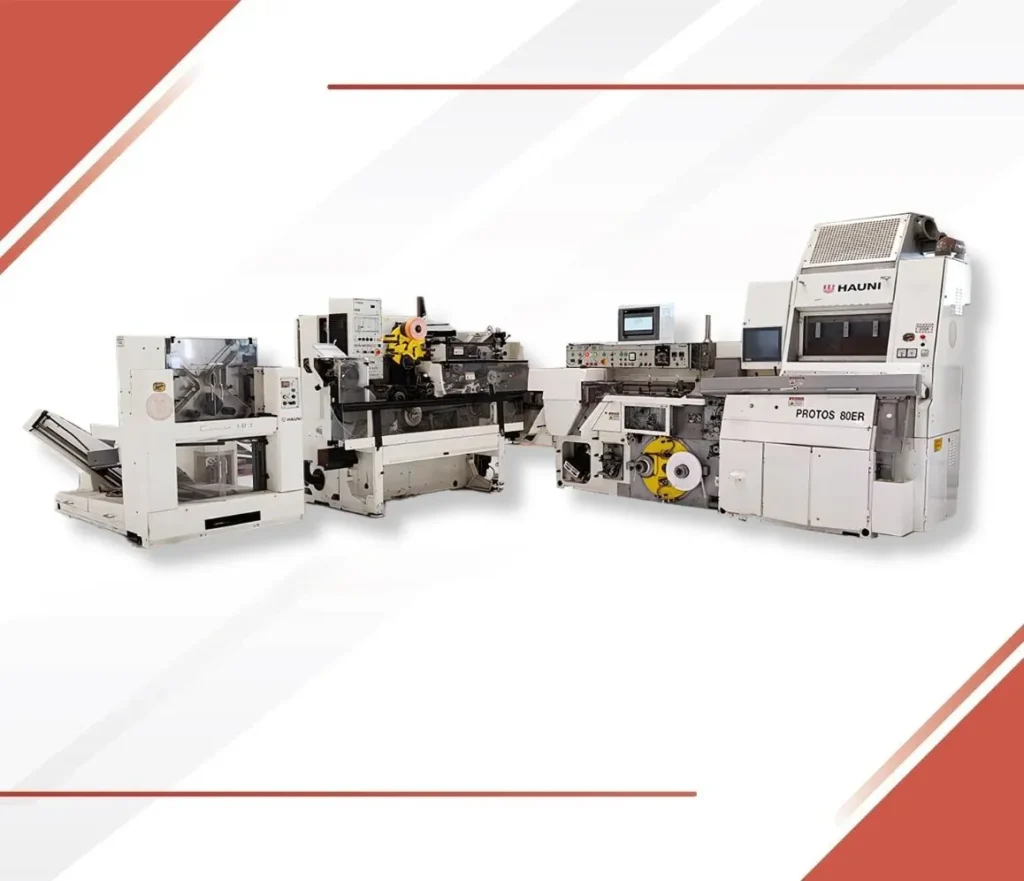
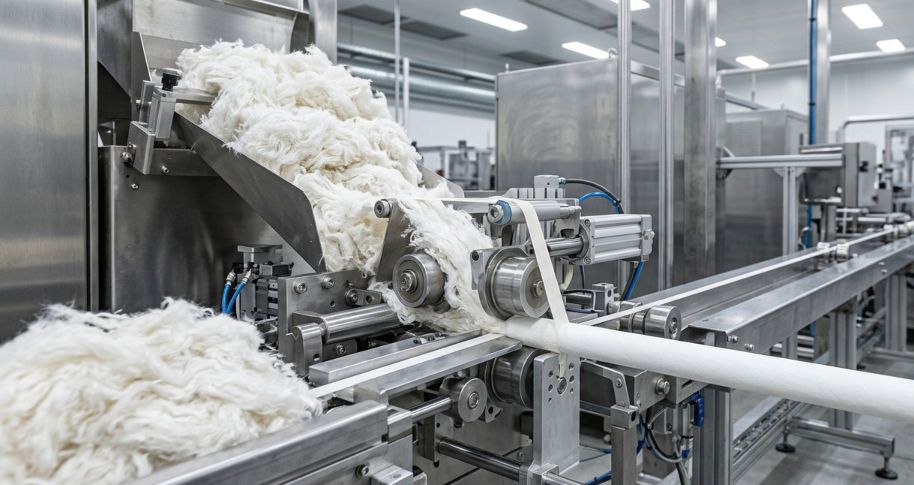
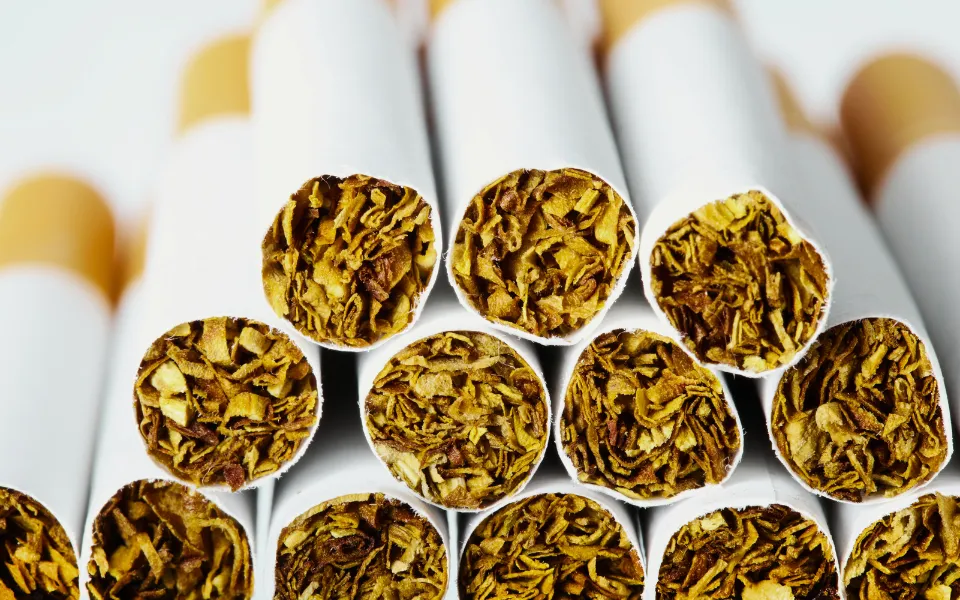
Modern manufacturing machinery is what turns processed tobacco into a finished product at real scale. Once tobacco is blended and conditioned, it feeds into cigarette making machines that meter the tobacco, form it into a continuous rod, and wrap it in cigarette paper, all in a single continuous process running anywhere from a few thousand to up to 20,000 cigarettes per minute on the fastest platforms.
From there, filter rods, produced separately on dedicated filter-making equipment, are attached to the tobacco rod and the combined unit is cut to length, a stage called tipping. The finished cigarettes then move to packing, where automated machines count and load the correct number into each pack, seal it, and wrap it, keeping every unit uniform without the variability manual packing would introduce at this volume.
Each stage above corresponds to a specific category of machinery, and matching the right equipment to each step is what actually determines line output and consistency:
See the full range of Cigarette Manufacturing Machines for a complete breakdown by model and specification.


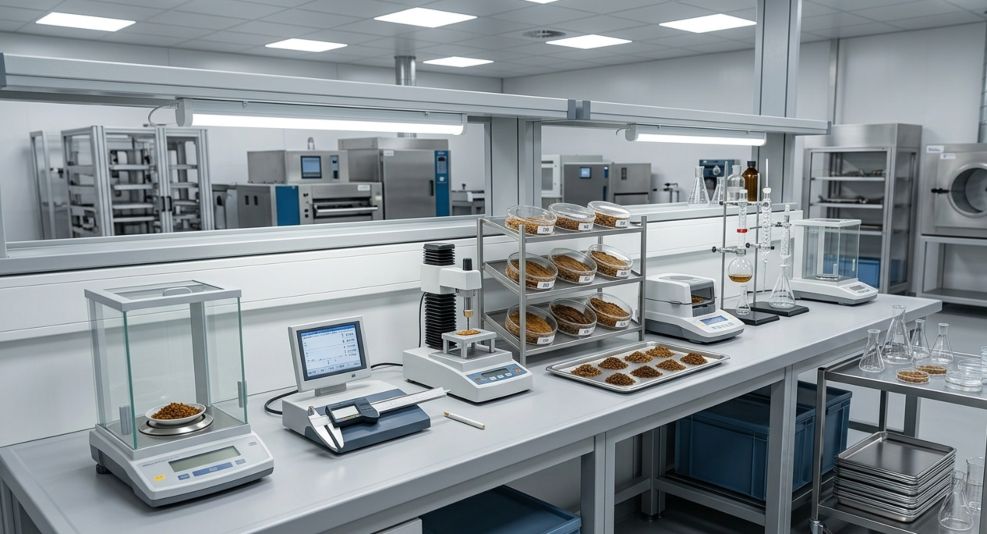
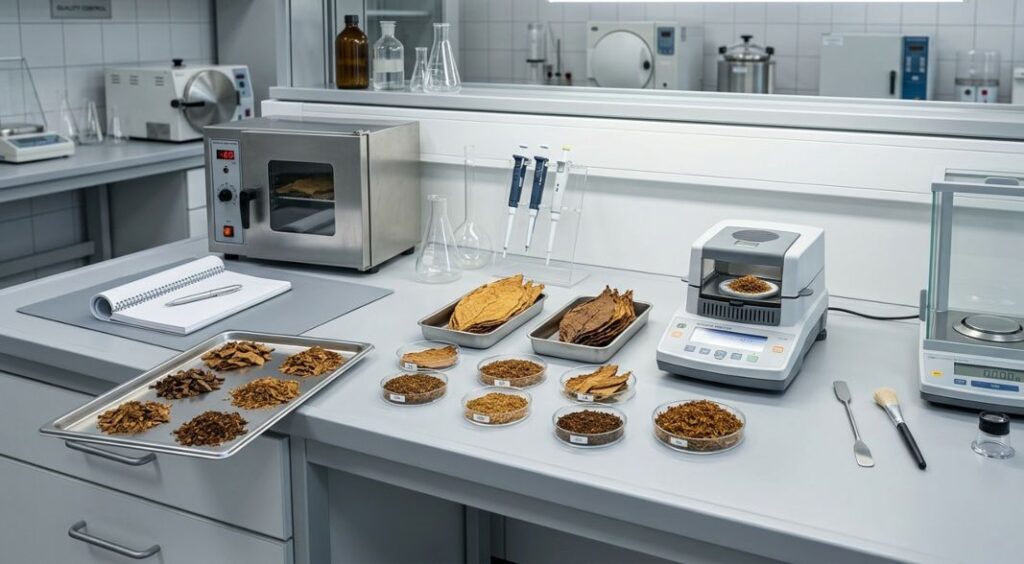
Quality control runs through every stage of cigarette manufacturing rather than sitting at the end as a final check. Raw tobacco is inspected for contaminants before processing even begins, and moisture levels are monitored continuously through curing and conditioning, since moisture drift is one of the most common root causes of downstream quality issues.
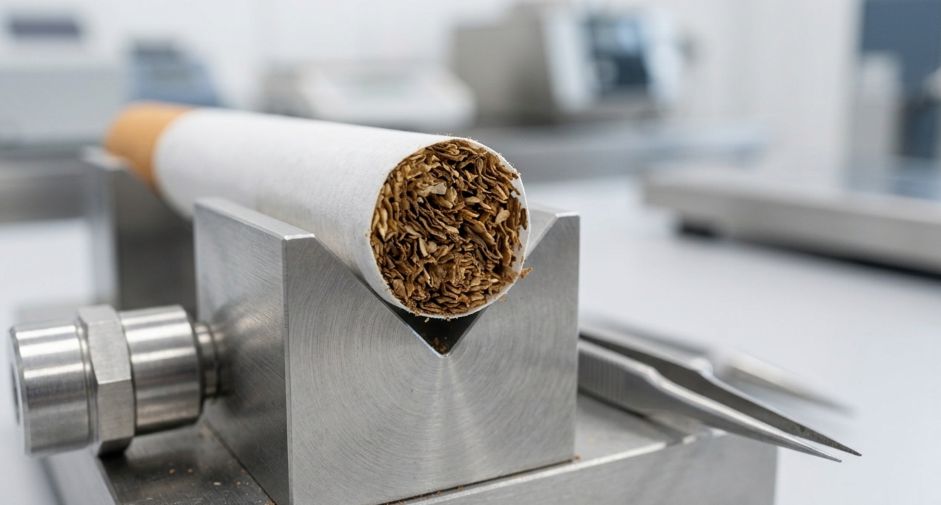
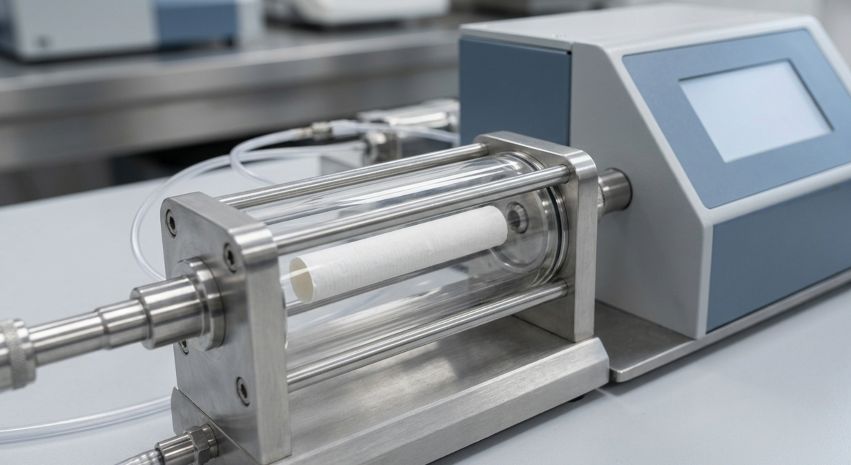
At the finished product stage, cigarettes are tested for consistency in flavor, burn rate, and nicotine delivery, typically through a mix of automated sensors and periodic lab testing. Real-time data analytics now play a growing role here too, flagging drift in rod weight, draw resistance, or filter attachment quality before it turns into a batch-level problem rather than an isolated defect.
Environmental and worker safety considerations run alongside every stage of production, not just at the farming level. Sustainable farming practices reduce the environmental footprint of tobacco cultivation, while structured waste management handles processing by-products responsibly rather than treating them as an afterthought.
On the factory floor, health and safety protocols protect workers from exposure to tobacco dust, processing chemicals, and the general hazards of operating high-speed machinery. Manufacturers are also increasingly focused on reducing harmful emissions from the manufacturing process itself, a trend that’s shaping equipment purchasing decisions as much as it’s shaping regulatory compliance.
The tobacco industry keeps shifting in response to consumer preference and regulatory change. Reduced-risk products, biodegradable filters, and more precise flavoring techniques are actively reshaping what “cigarette manufacturing” covers as a category, extending well beyond the traditional combustible product.
On the machinery side, AI and IoT integration are pushing efficiency and quality control further than sensor-based systems alone could manage, catching drift and predicting maintenance needs before they become production stoppages. Staying current on these shifts matters for any manufacturer trying to stay competitive rather than simply keep pace.
How long does the full cigarette manufacturing process take, from harvested leaf to finished pack?
It varies significantly by stage. Curing alone can take anywhere from a few days to several weeks depending on the method, and fermentation can add several more weeks on top of that. Once tobacco is blended and conditioned, though, the mechanical stages, rod forming, filter attachment, and packing, happen in a matter of seconds per cigarette on a modern high-speed line.
What’s the difference between primary processing and cigarette making?
Primary processing covers everything that happens to the tobacco before it reaches a cigarette maker: threshing, cutting, and conditioning to the right moisture level. Cigarette making is the mechanical stage where that processed tobacco is actually formed into a rod and wrapped in paper.
Why does moisture control matter so much throughout the process?
Moisture affects nearly everything downstream, how the tobacco cuts, how it burns, how well it forms into a stable rod, and how it tastes. Tobacco outside the target moisture range creates problems at every later stage, which is why it’s monitored continuously rather than checked once and left alone.
Are filters made on the same machine as the cigarette itself?
No. Filter rods are produced on separate, dedicated filter-making equipment and then attached to the tobacco rod at the tipping stage. Treating filter making and cigarette making as one combined step is a common misconception.
The cigarette manufacturing process is a genuine blend of agriculture, chemistry, and precision mechanical engineering, from growing and harvesting tobacco through curing, blending, primary processing, rod formation, and final packing. Understanding where each stage can introduce variability, and which machinery exists to control for it, is what lets manufacturing professionals actually improve their production process rather than just maintain it.
For a closer look at the equipment behind each stage, explore Orchid Tobacco’s full range of Cigarette Manufacturing Machines, Cigarette Packing Machines, and Cigarette Filter Making Machines.