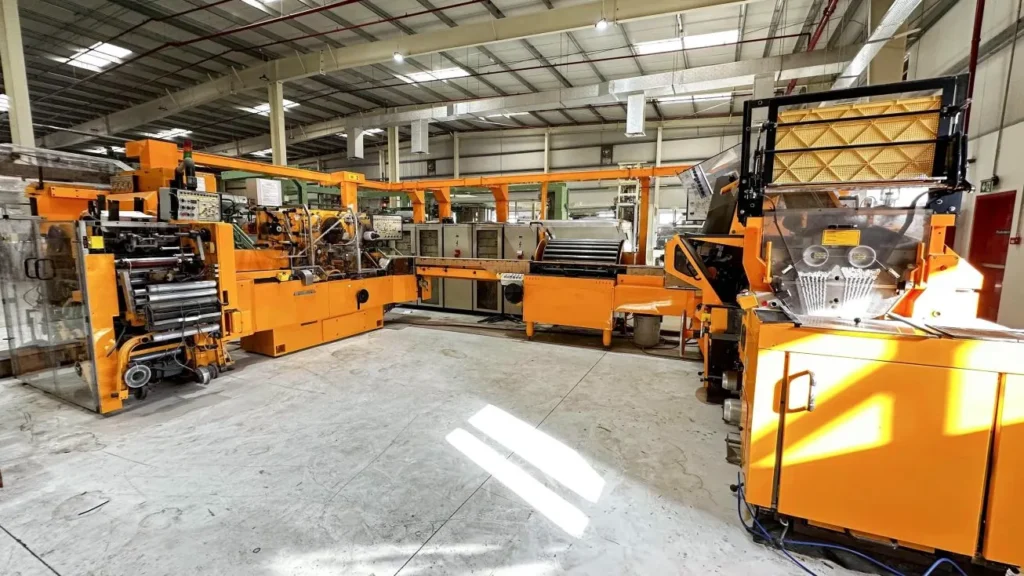
Maintaining cigarette density and weight consistency is essential for producing high-quality cigarettes that meet industry standards and customer expectations. Even minor variations in density or weight can affect burn rate, draw resistance, flavor delivery, and overall smoking experience. For manufacturers operating high-speed production lines, precise testing and quality control procedures are critical to maintaining brand reliability.
This guide explains how cigarette density and weight consistency are tested, why they matter, and how modern production equipment ensures accurate results.
Why Cigarette Density and Weight Consistency Matter
Uniform cigarettes are a hallmark of professional manufacturing. When density and weight fluctuate, several production issues may occur:
- Uneven burning
- Tight or loose draw resistance
- Inconsistent tobacco consumption
- Customer dissatisfaction
- Increased product rejection rates
Modern production lines supported by advanced Tobacco Machinery are designed to minimize such inconsistencies by integrating precise control systems throughout the process.
Understanding Cigarette Weight Consistency
Cigarette weight refers to the total mass of the finished cigarette, including tobacco filler, paper wrap, and filter. Maintaining a consistent weight ensures proper tobacco usage and compliance with production standards.
Manual Weight Testing Method
One of the most common quality control methods involves random sampling and precision weighing:
- Collect a sample batch (typically 20–50 cigarettes).
- Use a calibrated digital scale with at least 0.01g precision.
- Record individual weights.
- Calculate the average weight.
- Determine standard deviation to measure variation.
A low standard deviation indicates strong production consistency.
High-performance Cigarette Making Machines are engineered to control tobacco feed systems accurately, helping maintain consistent weight output.
Understanding Cigarette Density
Cigarette density refers to how tightly tobacco is packed inside the cigarette rod. It is typically calculated as mass per unit volume.
If density is too high:
- The cigarette becomes difficult to draw.
- Burn rate slows excessively.
If density is too low:
- The cigarette burns too quickly.
- Structure may feel loose or unstable.
Density control is particularly important in high-speed production environments.
How to Measure Cigarette Density
Volume and Weight Calculation Method
Since density equals weight divided by volume, manufacturers calculate it using the following steps:
- Measure the cigarette’s length using a precision gauge.
- Measure the diameter of the rod.
- Calculate volume using the cylinder formula:
Volume = π × (radius²) × length
- Divide the measured weight by the calculated volume.
The result provides a reliable density value that can be compared across samples.
Automated Density Monitoring Systems
Modern manufacturing lines increasingly rely on automated monitoring systems integrated within Cigarette Making Machines. These systems:
- Monitor rod formation in real time
- Detect density variations instantly
- Automatically adjust tobacco feed rates
- Reduce manual inspection requirements
Automation significantly reduces production errors and ensures consistency even at high speeds.
The Role of Filter and Packing in Weight Consistency
Weight consistency does not depend solely on tobacco filler. Filter attachment and final packaging also influence overall uniformity.
High-quality Cigarette Filter Making Machines ensure consistent filter length, pressure drop, and attachment precision. Variations in filter density or length can directly impact overall cigarette weight and draw resistance.
Similarly, Cigarette Packing Machines help maintain uniformity during the final stage, preventing damage or compression that may affect density after production.
Industry Tolerance Standards
Although standards vary by manufacturer and market requirements, most professional facilities aim for:
- Weight variation within ±1–2%
- Minimal deviation in density measurements
- Stable draw resistance values