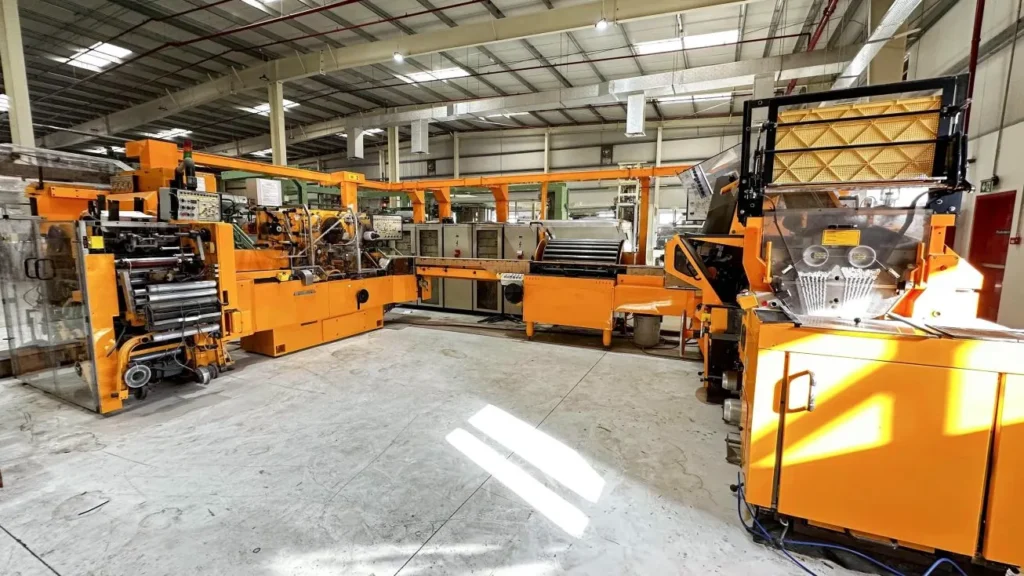
In modern cigarette manufacturing, integration between the cigarette making stage and the packing stage is crucial. A well-synchronized production line boosts efficiency, reduces waste, ensures product quality, and enables consistent output at scale.
This guide explains how makers (rollers) and packers work together — from tobacco leaf processing through cigarette formation and final packaging — and why integration matters. We’ll cover key concepts, machinery roles, automation, quality control, and best practices for successful line integration.
A cigarette maker is the machine that forms cut tobacco into cigarette rods, attaches filters (if required), and prepares them for cutting and packing.
The process includes:
These machines — commonly referenced within Tobacco Machinery — are engineered for high speed and precision.
Once cigarettes are formed, they must be bundled, wrapped, boxed, and prepared for shipment. This is the job of specialized Cigarette Packing Machines.
Packing operations may include:
Integration with packing lines ensures that once cigarettes are made, they move directly into packaging without manual handling.
Integration between cigarette makers and packing lines offers major benefits:
Integrated lines reduce idle time between formation and packing. Cigarettes are conveyed directly from maker → buffer → packer, eliminating intermediate breaks.
Integration enables real-time detection of defects at the maker stage. Any deviations can be automatically adjusted before packing.
Manual transfer of cigarettes often leads to damage or dropouts. Automated integration minimizes handling loss and ensures higher yield.
Fewer manual touchpoints mean less staffing and lower operational hazards.
When machines share signals and sensors, operators gain insight across the entire line — from formation to final packaging.
Let’s break down how the machines work together:
Blended and conditioned tobacco enters the maker. Blend characteristics (moisture, cut size, density) are shaped by earlier stages of manufacturing — and ultimately influence rod quality and packability. Some of the foundational science behind tobacco materials is covered in What Is Tobacco?.
In the cigarette maker, tobacco:
Maintaining uniformity here is critical because variations affect both consumer experience and packer performance.
Finished rods are often moved into a buffer or short staging area. This buffer handles:
Integration ensures cigarettes arrive in sequence, properly aligned and undamaged.
Modern lines use sensors — optical, camera-based, or laser — to confirm correct alignment and presence of cigarettes before they enter the packing stage.
This sensing also detects defects that can be rejected automatically.
Once the product reaches a packer, machines:
Because the maker and packer operate in harmony, the pipeline runs efficiently with minimal interruptions.
Integration is more than physical alignment — machines need to communicate.
Programmable Logic Controllers (PLC) on each machine exchange signals that regulate:
This creates a unified control architecture that harmonizes maker and packer actions.
Sensors monitor conditions such as:
Feedback is used to adjust both maker parameters (e.g., feed rate) and packing parameters (e.g., insertion speed).
If a maker runs faster than a packer can handle, buffer levels can overflow or cause damage. Smart control systems regulate pace to ensure continuity.
Even small variations in density or cut size — which can originate in material properties — can cause reject rates to spike. Feedback loops detect issues early and alert operators.
Faults in either maker or packer can cascade. Integrated systems often include automatic hold functions to prevent packing defective products.
Temperature or humidity changes can affect tobacco behavior. Integrated monitoring systems help stabilize conditions.
Unintegrated systems often lead to:
By contrast, a well-integrated line:
This is why many manufacturers invest in end-to-end integration platforms covering both maker and packer.
The smoother the cigarette maker performs, the easier it is for the packer to do its job — and vice versa. That’s why upstream factors such as tobacco quality, cut size, and conditioning also influence integration success.
For deeper context on tobacco chemistry and properties, you may find this article helpful: What Is Nicotine? Is Nicotine a Drug?.
Deploy hardware and software that allow machine states to be shared across maker and packer.
Sensors on both ends track process quality and machine performance.
Ensure consistent tobacco conditioning, moisture, and cut size before mixing and rod forming.
Routine calibration of sensors, conveyors, and actuators keeps the line predictable.
As part of integration, data patterns help diagnose issues before they cause stoppages.
Cigarette makers and packers are just two pillars of a fully integrated production line. Other machine categories — including cutters, conditioners, fermentation systems, and blending equipment — influence how smoothly maker-packer integration performs.
You can explore the breadth of advanced options through Tobacco Machinery.
From the smoker’s perspective, integration affects:
Proper integration supports a product experience that aligns with customer expectations for quality and satisfaction.
Brands compete on experience. A cigarette that burns consistently, tastes uniform, and feels reliable builds consumer trust.
Integration enables:
This supports brand positioning and repeat purchase behavior.
A seamlessly integrated line delivers:
Fewer stoppages
Less product damage
Higher output rates
Lower labor and inspection costs
Better quality traceability
Manufacturers benefit from a line that handles the transition from production to packaging with minimal friction and maximum reliability.
Here’s how a modern integrated flow typically operates:
Integrated lines increasingly feed data into quality systems and enterprise dashboards. From machine speeds to process alarms, this data:
Data is a key enabler of modern integration — turning automation into optimization.
Integrated systems also support regulatory compliance — for example:
This is important for markets where documentation and compliance carry legal weight.
Integrating Cigarette Making Machines with Cigarette Packing Machines is not just about linking two machines. It’s about:
✔ Continuous, seamless production
✔ Real-time monitoring and communication
✔ Reduced waste and higher quality
✔ Faster throughput and scalable productivity
✔ Consistent consumer experience
Integration ensures that every cigarette produced not only meets technical specifications but also aligns with consumer expectations for burn, flavor, and consistency — ultimately supporting brand strength and operational excellence.

We specialize in the provision of Tobacco Machinery. Our expertise encompasses not only the trading of machinery but also extends to being a dedicated supplier. This specialization is enriched by our comprehensive solutions tailored for emerging Cigarette Companies. What sets us apart is our ability to offer firsthand insights through our active Cigarette Manufacturing operation in the UAE.