Tobacco fermentation is one of the most important stages in the tobacco processing cycle. After curing, tobacco leaves still contain raw compounds, strong odors, and chemical residues that can create a harsh smoking experience. Fermentation transforms these leaves by breaking down undesirable compounds and developing the smooth flavor profile expected in finished tobacco products.
For cigarette manufacturers and tobacco processors, understanding fermentation is essential for producing high-quality tobacco suitable for modern production lines. Fermented tobacco burns more evenly, tastes smoother, and performs better in automated machinery.
In this complete guide, we will explain how fermentation reduces harshness in tobacco leaves, what chemical changes occur during the process, how fermentation improves tobacco quality, and how it fits into the larger cigarette manufacturing workflow supported by modern Tobacco Machinery.
Tobacco fermentation is a controlled biochemical process in which tobacco leaves are exposed to specific levels of heat, moisture, and oxygen for a period of time. During this stage, natural enzymes and microorganisms trigger chemical reactions that refine the leaf’s composition and improve its smoking characteristics.
The process transforms raw cured leaves into a smoother, more aromatic material suitable for cigarette manufacturing.
Key outcomes of fermentation include:
These changes are essential before tobacco enters the manufacturing stage where it will be processed using Cigarette Making Machines.
For readers unfamiliar with tobacco itself, understanding the plant and its composition can help explain why fermentation is necessary. A detailed explanation can be found in the guide What Is Tobacco?
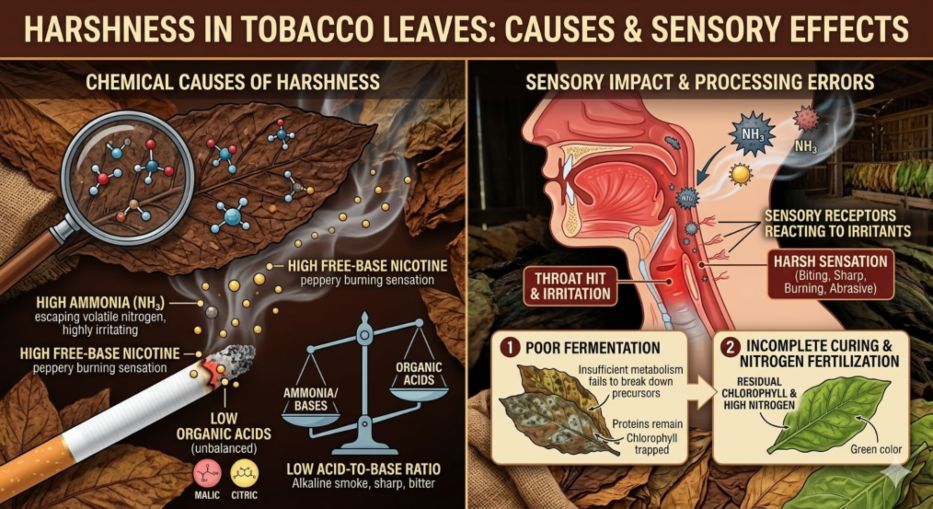
Before fermentation, cured tobacco leaves still contain several compounds that contribute to harshness, bitterness, and irritation.
Common harsh components include:
1. Ammonia Compounds
Fresh tobacco leaves contain nitrogen-based compounds that release ammonia during smoking, producing a strong, irritating taste.
2. Chlorophyll Residues
Remaining chlorophyll can create a grassy, bitter flavor.
3. Polyphenols and Phenolic Compounds
These compounds contribute to sharpness and astringency.
4. Excess Sugars and Proteins
Unstable sugars can create uneven combustion and undesirable flavors.
During fermentation, these compounds undergo chemical transformation. Microbial activity and enzymatic reactions degrade ammonia, nicotine derivatives, and phenolic compounds, significantly reducing harshness and improving aroma
Fermentation works through a combination of enzymatic reactions, microbial activity, and oxidation processes.
Breakdown of Harsh Compounds
During fermentation:
These reactions make tobacco less irritating and smoother to smoke.
Transformation of Sugars
Sugars and carbohydrates convert into aromatic compounds, creating subtle sweetness and richer flavor.
Stabilization of Nicotine
Nicotine does not disappear completely, but fermentation stabilizes its behavior within the leaf. This prevents an overly sharp or aggressive nicotine sensation.
Oxidation of Polyphenols
Polyphenols oxidize during fermentation, reducing bitterness and sharpness in the smoke.
These changes collectively create tobacco that is balanced, smooth, and suitable for blending.
The fermentation stage involves several major biochemical transformations.
1. Ammonia Reduction
Ammonia is one of the primary sources of harshness in tobacco smoke. During fermentation, ammonia compounds gradually evaporate or transform into milder substances.
This dramatically improves the smoothness of the smoke.
2. Chlorophyll Breakdown
Chlorophyll gradually degrades during fermentation. As it breaks down:
This color change is often used as a visual indicator of successful fermentation.
3. Carbohydrate Conversion
Complex carbohydrates convert into smaller molecules that contribute to tobacco aroma.
4. Pectin and Cell Wall Degradation
During fermentation, microbial activity partially breaks down structural compounds such as pectin and cellulose. This softens the leaf and improves its flexibility.
This structural change also helps tobacco perform better during mechanical processing.
Fermentation is not just about reducing harshness. It also improves the overall smoking experience.
Smoother Smoke
Reduction of ammonia and bitter compounds creates a smoother smoke that is less irritating to the throat.
Balanced Flavor Profile
Fermentation develops a combination of:
Improved Burn Characteristics
Fermented tobacco burns more evenly, which helps maintain consistent cigarette performance.
Stable Chemical Composition
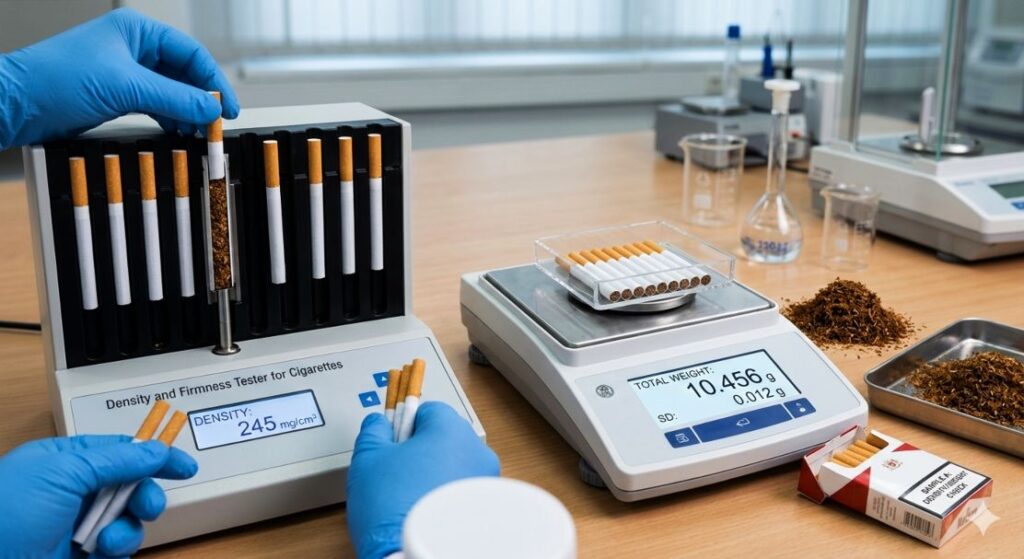
Fermented leaves maintain stable chemical properties, ensuring predictable results during manufacturing.
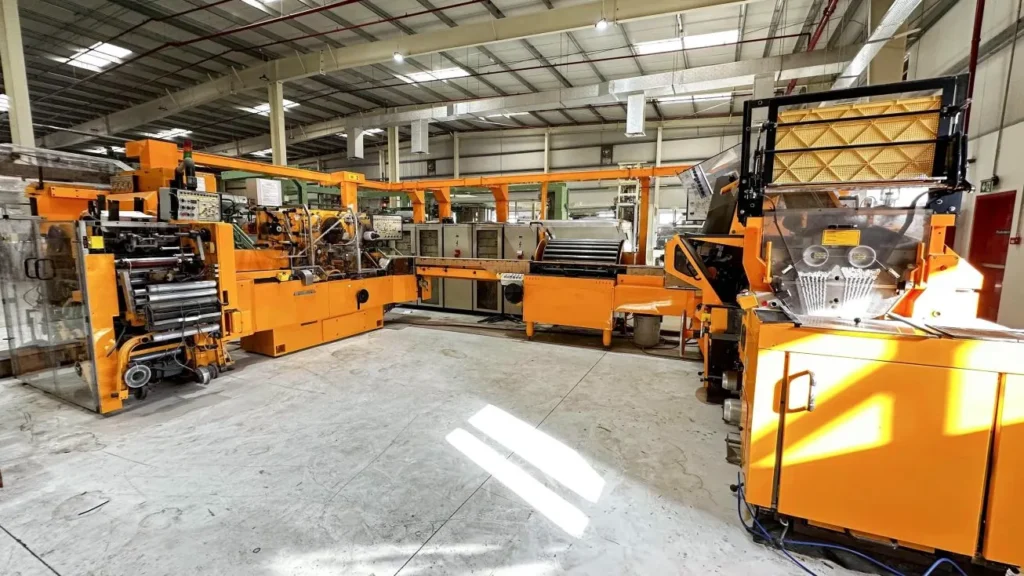
These improvements allow tobacco to perform efficiently during high-speed production using Tobacco Machinery.
Fermentation also improves the physical characteristics of tobacco leaves.
These changes are important for automated cigarette manufacturing.
Softer Leaf Texture
Fermented tobacco becomes softer and easier to handle.
This reduces breakage during:
Better Shredding Performance
During cutting operations, fermented leaves produce cleaner tobacco strands.
This results in:
Consistent Filling Density
Uniform tobacco fibers ensure consistent density when forming cigarette rods.
This improves performance in Cigarette Making Machines.
Although fermentation methods vary between tobacco types, the core process follows several stages.
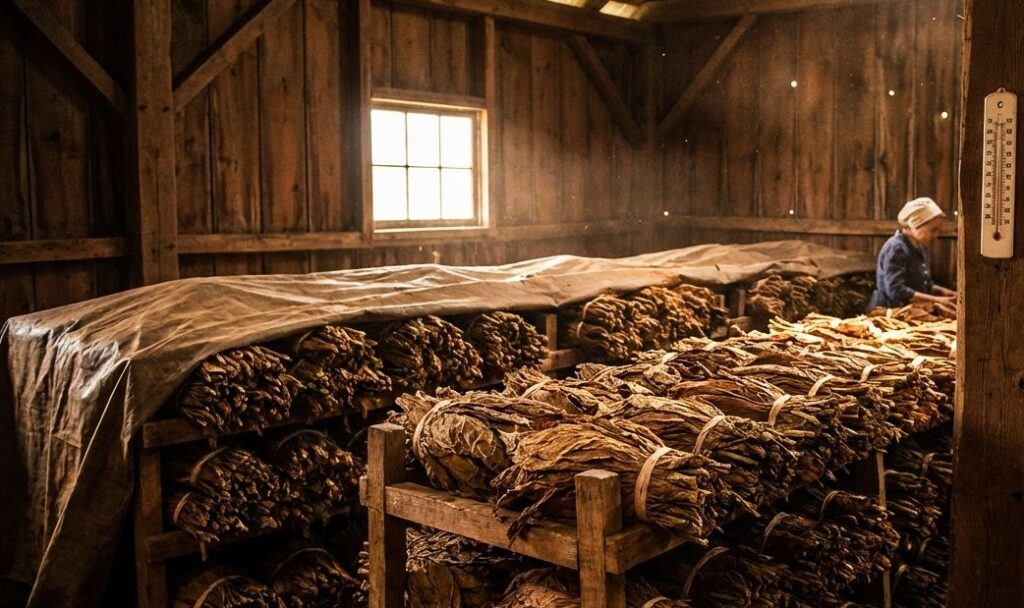
Step 1: Preparation of Cured Leaves
After curing, tobacco leaves are sorted and stacked.
Moisture levels are adjusted to prepare the leaves for fermentation.
Step 2: Controlled Stacking
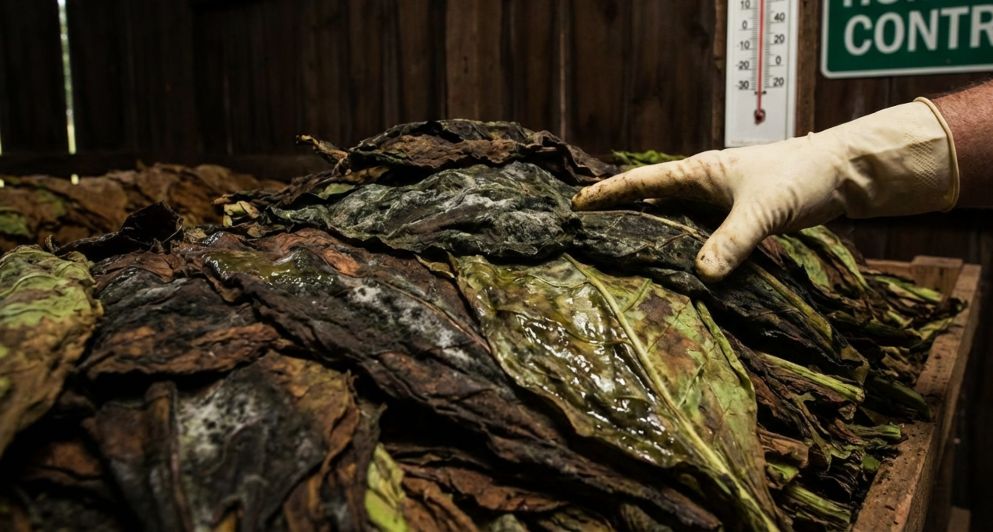
Leaves are stacked in large piles or chambers.
These stacks generate heat through natural biochemical reactions.
Step 3: Temperature and Humidity Control
Typical fermentation conditions include:
Temperature: 45–55°C
Humidity: 65–75%
These conditions activate enzymatic reactions inside the leaf.
Step 4: Monitoring the Process
The tobacco stacks are periodically turned and inspected.
This ensures:
Step 5: Resting and Aging
After fermentation, tobacco leaves rest for several weeks or months.
This aging period further smooths the flavor and stabilizes chemical composition.
Fermentation is one of the most critical steps in tobacco processing. By reducing harsh compounds such as ammonia and chlorophyll, fermentation transforms raw tobacco leaves into a smoother, more refined material suitable for cigarette production.
The process not only improves flavor and aroma but also enhances tobacco’s physical properties, making it easier to process in modern manufacturing systems.
When combined with reliable Tobacco Machinery, well-maintained Spare Parts, and efficient production equipment like Cigarette Making Machines and Cigarette Packing Machines, properly fermented tobacco becomes the foundation of high-quality cigarette manufacturing.
Understanding this process allows manufacturers to maintain consistency, improve product quality, and ensure optimal performance throughout the entire tobacco production line.

We specialize in the provision of Tobacco Machinery. Our expertise encompasses not only the trading of machinery but also extends to being a dedicated supplier. This specialization is enriched by our comprehensive solutions tailored for emerging Cigarette Companies. What sets us apart is our ability to offer firsthand insights through our active Cigarette Manufacturing operation in the UAE.