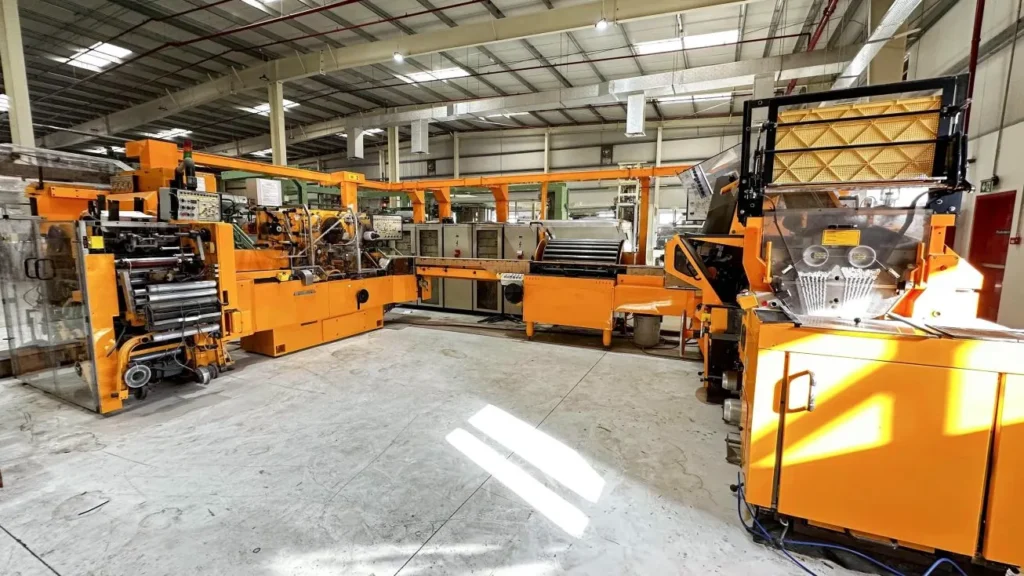
In cigarette manufacturing, tobacco mixing operations are a pivotal step that directly impacts product quality, production throughput, and overall manufacturing cost. Efficiency in this process affects how well the blend performs in Cigarette Making Machines, how smoothly products move to Cigarette Packing Machines, and ultimately, how consistent the end product is in flavor, burn, and texture.
This guide breaks down practical strategies to improve efficiency in tobacco mixing — from raw material handling to automation and quality control — helping manufacturing operations deliver consistent, high-quality blends with less waste and cost.
Before diving into efficiency improvements, it’s important to understand what tobacco mixing is. Tobacco mixing refers to the process of combining different tobacco types and components — lamina leaf, stems, reconstituted tobacco, and casing or flavor solutions — into a uniform, consistent blend ready for cutting and processing.
The goal is to produce a homogeneous mixture where each cigarette gets the same proportion of tobacco types and moisture distribution. A well-mixed blend ensures:
Efficient tobacco mixing reduces production setbacks, improves machine performance, and supports predictable product quality — especially vital for brands aiming for consistency, such as those competing in the global markets discussed in What Is Tobacco?.
Manufacturing efficiency often begins with consistency in the raw materials. Mixed raw tobacco from multiple sources can vary significantly in:
Standardizing these attributes before mixing reduces the need for corrective adjustments during blending, saving time and minimizing waste.
Tips for standardization:
Standardized input reduces variability during mix operations, leading to more predictable outputs in systems such as Cigarette Making Machines downstream.
Proper moisture control is one of the most important factors in efficient mixing. Tobacco that is too dry creates excess dust and poor blending; too wet, and it clumps or sticks to equipment.
Moisture influences:
To optimize moisture:
Consistent moisture reduces mixing time and improves the quality of the blend.
Investing in quality tobacco machinery designed for efficient blending is essential. Modern mixing systems provide:
Compared to manual or semi-automated mixing, high-performance machines:
These systems create a reliable foundation for all subsequent steps in cigarette manufacturing.
Having well-defined standard operating procedures (SOPs) ensures that each batch follows the same process steps. Batch controls should include:
SOPs bring repeatability and ease of training, and they allow quality teams to trace and correct issues quickly, minimizing downtime and rework.
Digital monitoring helps detect deviations from the ideal mixing profile in real time. Sensors and analytics can continuously report on:
When operators can visualize these parameters on dashboards, adjustments happen faster — preventing quality drift and reducing waste. This kind of digitized process control is a key factor in modern tobacco manufacturing optimization.
Poor material handling leads to downtime, inconsistent input to mixers, and process interruptions. To improve flow:
Efficient material flow means tobacco arrives at the mixer ready and consistently, reducing idle time and unplanned stoppages.
Mixers, conveyors, and associated systems must be maintained to prevent unplanned downtime — one of the biggest drains on efficiency. A strong preventive maintenance program ensures:
Breakdowns in the mixing stage have knock-on effects, slowing Cigarette Making Machines and Cigarette Packing Machines downstream.
Skilled operators make a substantial difference in mixing efficiency. Operators should understand:
Training programs that build deep understanding of tobacco properties and machine behavior lead to fewer manual corrections and higher productivity.
Even standard processes sometimes require real-time adjustments. Whether due to minor variations in raw material or environmental conditions, the ability to respond quickly helps maintain efficiency and quality.
Real-time monitoring enables:
This responsive approach ensures that the system adapts to variation rather than creating waste.
Beyond immediate adjustments, data collected during mixing operations can reveal patterns:
With analytics, managers can refine SOPs, adjust machine settings, and improve efficiency over time rather than treating problems in isolation.
Efficiency in tobacco mixing doesn’t exist in isolation — it affects entire manufacturing lines.
Successful mixing ensures that tobacco fed into Cigarette Making Machines maintains a uniform texture and moisture content. Benefits include:
Uniform blends translate into more predictable input for Cigarette Packing Machines — fewer rejects, cleaner packs, and stable packaging cycles.
Efficient tobacco mixing is not just a technical objective — it shapes the finished cigarette’s quality attributes. A balanced, uniform mix contributes to:
These quality attributes directly influence consumer perception — especially in markets where brand loyalty is shaped by consistency, such as the premium segments referenced in What Is Tobacco?.
| Challenge | Cause | Solution |
| Inconsistent blend | Variable raw material | Standardize inputs and pre-condition leaves |
| Excess dust | Low moisture or poor mixing | Adjust humidity and improve mix timing |
| Machine stoppage | Improper feeder calibration | Regular maintenance and automated sensors |
| Flavor variation | Poor additive distribution | Use precision dosing and digital monitoring |
| Extended cycle time | Improper recipe or operator error | Refine SOPs and train operators |
Improving mixing efficiency also supports sustainability goals:
Efficient mix operations reduce environmental footprint while improving profitability.
Improving efficiency in tobacco mixing operations is a multifaceted task. It combines strong raw material preparation, modern Tobacco Machinery, moisture control, operator training, digital monitoring, and data-driven decision-making. When executed effectively, these strategies lead to consistent blend quality, reduced waste, smoother downstream production, and higher productivity throughout the manufacturing line.
Efficient mixing not only improves operational performance but also helps preserve the flavor, aroma, and consistency that define successful cigarette products.

We specialize in the provision of Tobacco Machinery. Our expertise encompasses not only the trading of machinery but also extends to being a dedicated supplier. This specialization is enriched by our comprehensive solutions tailored for emerging Cigarette Companies. What sets us apart is our ability to offer firsthand insights through our active Cigarette Manufacturing operation in the UAE.