The filter on a cigarette isn’t an afterthought bolted onto a finished tobacco rod. It’s a fully manufactured product in its own right, built on a separate production line from a completely different raw material, before the two ever meet at the combining stage. Cigarette filter rod manufacturing has its own process, its own raw material chemistry, and its own quality control challenges, distinct from everything happening on the tobacco side of the factory.
This article covers how filter rods are actually made, from raw fiber to finished rod, and how different filter types are engineered during the process.
Filter rod manufacturing is the process of turning cellulose acetate fiber into a continuous, bonded filter rod, which is then cut into multi-filter length segments for use at the cigarette combining stage. It happens on dedicated filter rod making equipment, separate from the tobacco rod maker, and produces filter material well ahead of when it’s actually joined to a tobacco rod and cut into finished cigarettes.
The vast majority of cigarette filters are made from cellulose acetate tow, a continuous bundle of extremely fine, crimped filament fibers supplied in a compressed, banded package. In its packaged form, tow is dense and tightly compacted, nothing like the bulky, fluffy material that ends up inside a finished filter. Getting from compacted tow to a usable filter rod is what the manufacturing process is built around.
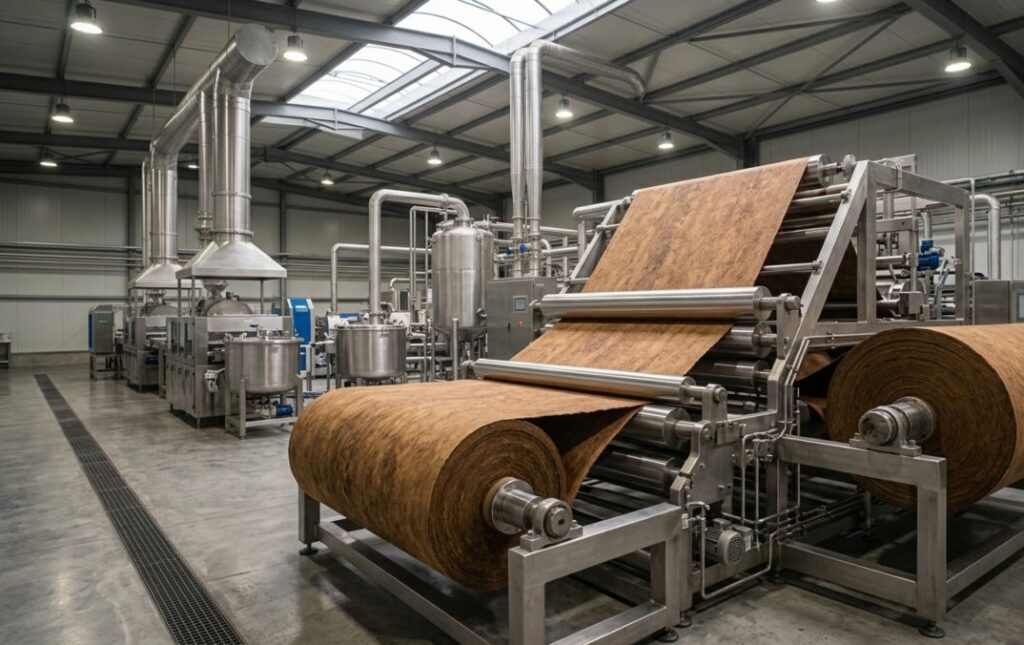
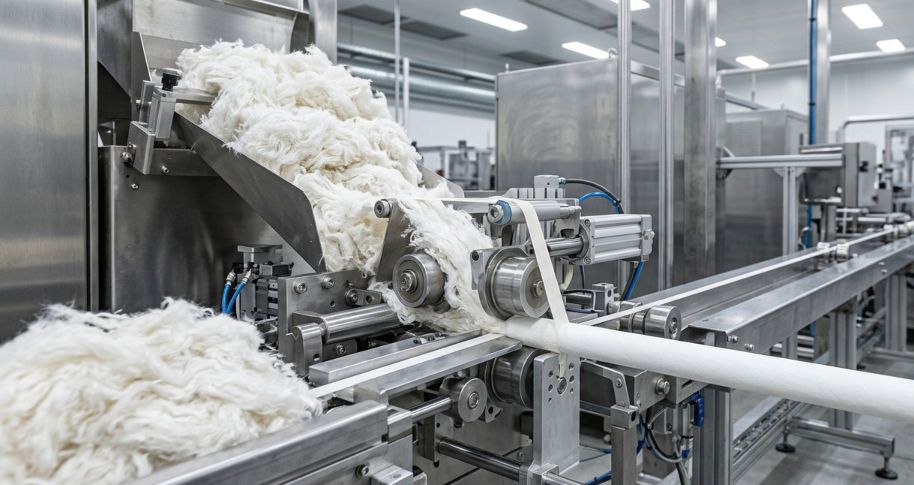
The banded tow package is opened and fed through blooming equipment, typically using pressurized air jets, which separates the tightly packed fibers and expands them to their full bulk. This blooming step is essential, since a filter’s ability to trap particulate matter and shape draw resistance depends heavily on the fiber structure achieving proper volume and even distribution before it’s formed into a rod.
Once bloomed, the loose fiber mass is sprayed with a plasticizer, commonly triacetin, which bonds the individual fibers together into a cohesive, stable structure. Without this bonding agent, the fiber mass wouldn’t hold together as a usable rod at all, so the accuracy and evenness of plasticizer application is one of the more closely controlled variables in the entire process.
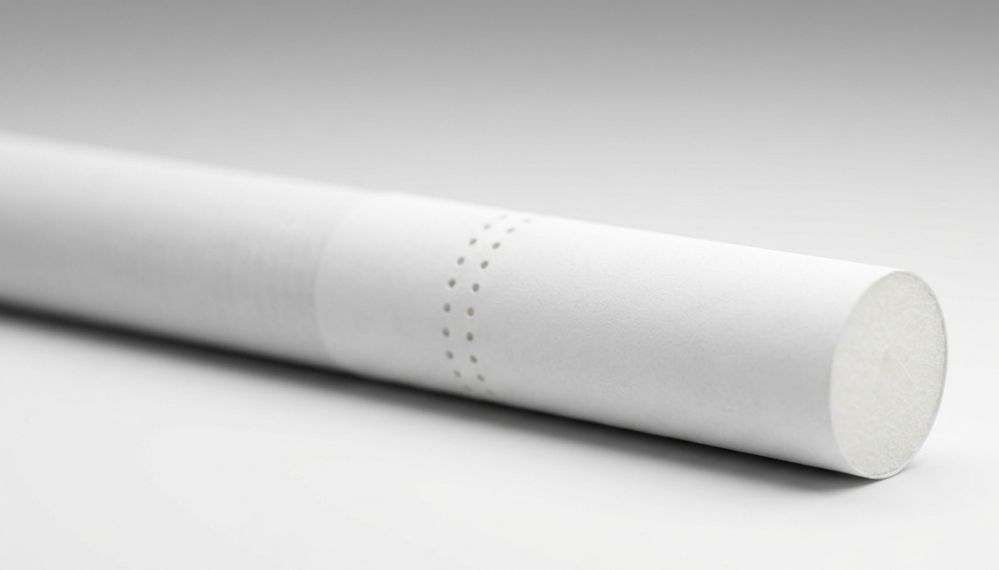
The plasticized fiber mass passes onto a garniture, similar in principle to the tobacco rod garniture, where it’s compressed into a continuous rod shape and wrapped in plug wrap paper to hold its form. Our guide to cigarette paper types covers what plug wrap actually is and how it differs from the paper used elsewhere in the cigarette.
The freshly formed rod passes through a heated setting zone, where the plasticizer bond stabilizes and firms into its final structure. This step determines much of the rod’s final hardness and density, which is part of why setting temperature and timing are tightly controlled rather than treated as a simple drying pass.
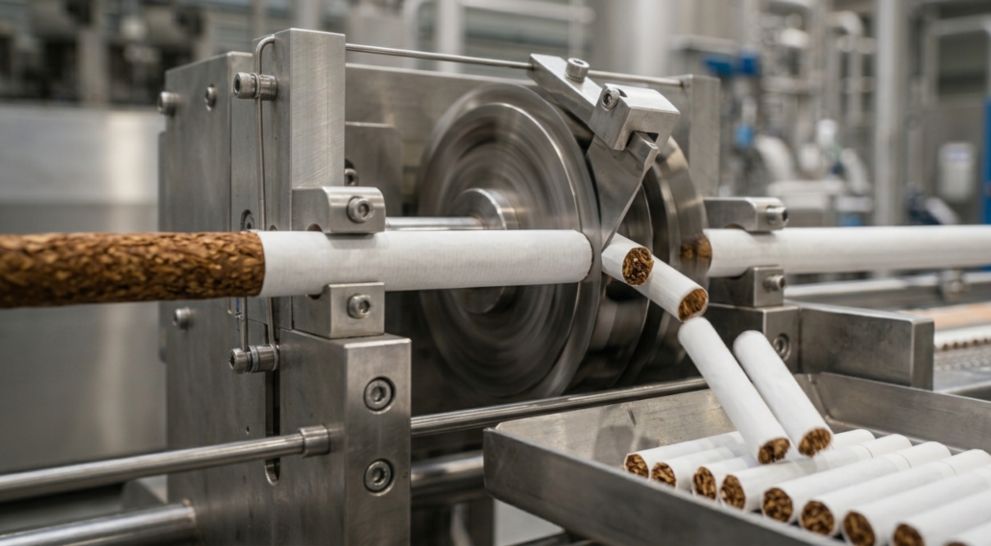
The continuous, set filter rod is cut into multi-filter length segments, each equivalent to several individual cigarette filters, and prepared for storage or immediate transfer to the combining stage, where a rod gets cut down further into individual filter lengths as it’s joined to tobacco rods.
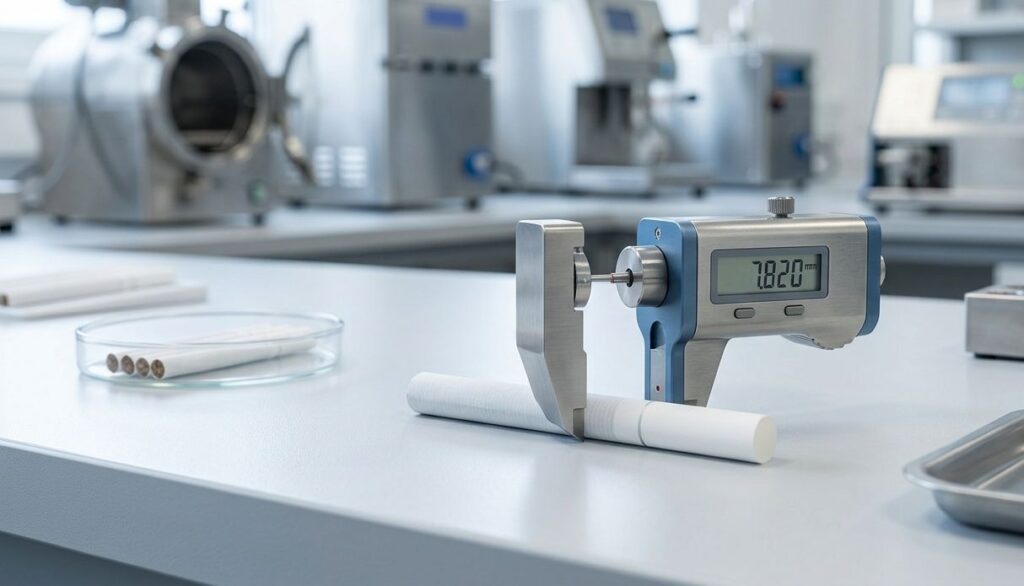
Filter rod lines run continuous checks on pressure drop and rod hardness throughout production, since both directly affect how the finished filter performs once attached to a cigarette. Rods falling outside tolerance are flagged and rejected before reaching the combining stage.
Standard cellulose acetate filters make up the bulk of global production, but several variations are manufactured using the same core process with added components. Activated carbon filters incorporate carbon granules within the tow structure during forming, adding additional filtration characteristics beyond a plain acetate filter. Dual-filter and multi-segment designs combine sections with different densities or materials along a single filter’s length. Flavor capsule filters embed a small crushable capsule within the filter rod during manufacturing, designed to release its contents when the capsule is pressed. Each variation requires its own adjustments to the standard forming process, but all build on the same fundamental tow, plasticizer, and garniture forming steps.
Filter quality is judged primarily on pressure drop consistency and rod hardness, both measured continuously during production. Pressure drop in the filter rod itself is closely related to the draw resistance of the finished cigarette, since the filter contributes a significant share of total resistance alongside the tobacco rod. Hardness affects how the filter handles mechanically through the combining and packing stages, and a filter that’s too soft can deform or crush during high-speed handling, while one that’s too hard can affect how the cigarette actually draws.
Filter rods produced on this line don’t become part of a finished cigarette until the combining stage, where individual filter lengths are joined with tobacco rod segments and wrapped in tipping paper, a stage covered in more detail in our guide to the cigarette rod making process. Filter ventilation, created through perforation in that same tipping paper, is covered separately in our guide to cigarette ventilation testing.
Filter hardness, pressure drop, and filter type are all part of a brand’s core product specification, set during development alongside blend and paper choices. For brand owners working through private label or contract manufacturing arrangements, filter type is a meaningful positioning decision, and a manufacturer’s in-house filter rod production capability, rather than sourcing filters from a third party, generally gives more control over consistency and turnaround on custom filter specifications.
Filter rod production runs on dedicated cigarette filter making machines, operating as its own production line before feeding into the combined cigarette-making process. A full view of how filter production connects to the rest of the factory is available on our tobacco machinery page.
Cigarette filter rod manufacturing runs almost entirely out of sight from the tobacco side of the factory, but it’s a precise, chemically dependent process in its own right, turning compacted fiber tow into a bonded, dimensionally consistent filter rod ready to be joined with tobacco. Filter hardness and pressure drop set during this stage carry straight through to how the finished cigarette actually performs, which makes it one of the more technically demanding, if less visible, parts of cigarette production.

We specialize in the provision of Tobacco Machinery. Our expertise encompasses not only the trading of machinery but also extends to being a dedicated supplier. This specialization is enriched by our comprehensive solutions tailored for emerging Cigarette Companies. What sets us apart is our ability to offer firsthand insights through our active Cigarette Manufacturing operation in the UAE.