The difference between a regular cigarette and a slim can come down to a couple of millimeters, and the tolerance a factory holds on that measurement is far tighter than most people would guess. Cigarette circumference measurement is one of the quieter, more constant checks running through cigarette production, and it affects far more than how thick a cigarette looks in someone’s hand. It shapes regulatory classification, machine compatibility, tobacco consumption per stick, and how consistent a brand feels from one pack to the next.
This article covers what cigarette circumference measurement actually involves, how it’s tested, what typical formats look like, and why a drift of even a fraction of a millimeter matters on a production line.
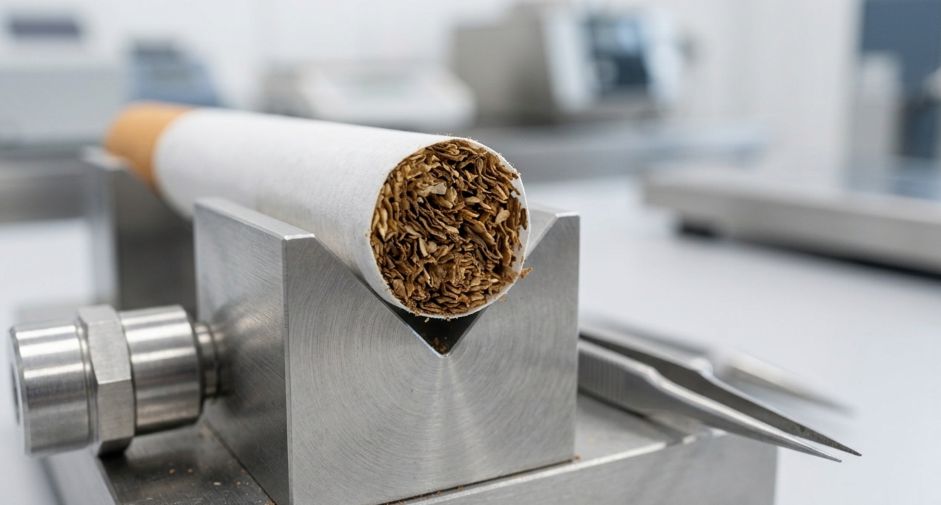
Cigarette circumference measurement is the process of checking the outer circumference of a finished cigarette rod at a defined point, almost always at the midpoint of the rod, to confirm it falls within a manufacturer’s specified tolerance. It’s typically expressed in millimeters and is one of the standard physical dimension checks performed alongside length, weight, and draw resistance testing during quality control.
Testing is carried out under standard conditioning conditions for temperature and humidity, since paper and tobacco both respond to ambient moisture, and an uncontrolled testing environment can shift a reading enough to produce a false pass or fail. This is consistent with the conditioning atmospheres used across most cigarette physical testing, not something unique to circumference alone.
Regulatory and format classification. Cigarette formats such as regular, slim, and super slim are defined largely by circumference, and in many markets these classifications carry specific labeling, tax, or packaging implications. A production run that drifts outside the declared format’s circumference range can create a genuine compliance problem, not just a cosmetic one.
Machine compatibility. Packing machines, filter attachment equipment, and cartoning lines downstream of the maker are all calibrated to a specific rod diameter. A cigarette that’s even slightly out of spec can jam, seat incorrectly in a pack cavity, or produce loose, poorly formed packs on a high-speed line.
Tobacco consumption consistency. Circumference directly affects how much tobacco a given length of rod holds, which ties into both production cost and the tar and nicotine delivery a brand is formulated to hit.
Consumer perception. Regular smokers of a brand notice a change in thickness even when they can’t articulate why a pack suddenly feels different, and circumference drift is one of the more common quiet causes of that shift.
Two general approaches are used across the industry. Traditional physical measurement uses a precision band or tape gauge wrapped around the rod at the test point, giving a direct mechanical reading. Modern production lines increasingly use laser or optical scanning systems integrated directly into the manufacturing line, which measure circumference continuously or at high sampling frequency without needing a technician to pull and manually test individual sticks.
Both approaches are governed by CORESTA Recommended Methods and equivalent ISO specifications for cigarette dimensional testing, which set out sampling points, tolerance definitions, and the conditioning atmosphere required for results to be considered valid and comparable across labs.

Exact figures vary by manufacturer and market, but broad industry ranges give a sense of scale. Regular cigarettes commonly run in the region of 24 to 25 mm. Slim formats typically sit lower, often in the 22 to 23 mm range. Super slim formats go narrower still, commonly falling somewhere around 17 to 19 mm depending on the specific product line. These figures are approximate and every brand sets its own precise target and tolerance band as part of product specification, but they illustrate why circumference is treated as a defining format characteristic rather than an incidental dimension.
A handful of variables account for most out-of-spec readings on a production line.
Tobacco rod density variation. Inconsistent tobacco feed into the maker changes how tightly the rod is packed, which can shift its effective diameter even when the wrapping paper itself is unchanged.
Cigarette paper tension and wrap consistency. The paper wrapping the rod has to be applied at a consistent tension. Looser or tighter wrapping directly changes the finished circumference.
Paper and tobacco moisture content. Both materials respond to humidity, and a shift in factory ambient conditions or in incoming material moisture can move circumference readings without any change to machine settings at all.
Machine calibration drift. Like most precision manufacturing equipment, cigarette making machines require periodic recalibration, and gradual mechanical wear on rod-forming components is a common, if unglamorous, cause of slow circumference drift across a long production run.
Downstream effects compound quickly. A rod running narrow may seat loosely in a pack designed for the declared format, producing packs that look and feel wrong on the shelf. A rod running wide can jam packing equipment or fail to fit the pack cavity at all, halting the line rather than just producing a cosmetic defect. Beyond the mechanical issues, circumference tied to a declared format that falls outside regulatory tolerance in a given market can create a labeling compliance problem serious enough to hold up a shipment.
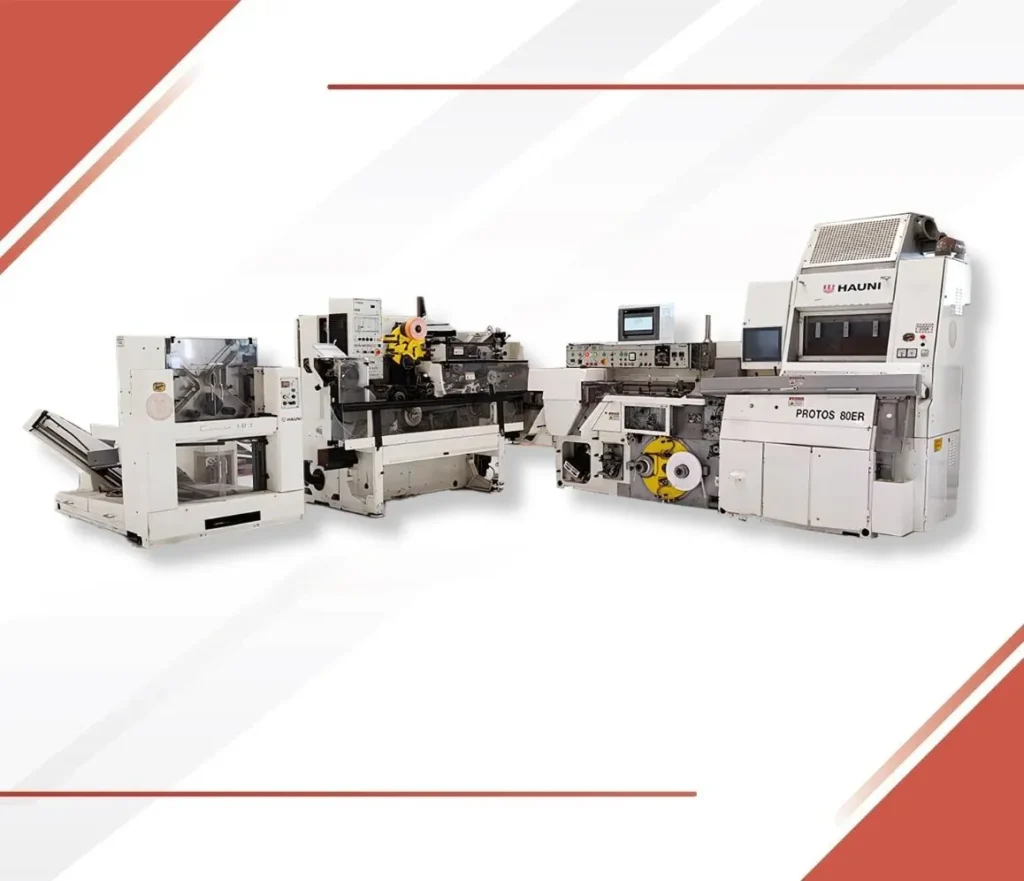
Circumference is set early in product development and carried through as a fixed specification across every subsequent production run. It has to be coordinated with the machinery running the job, since cigarette making machines forming the rod and the packing machines further down the line both need to be set up around the same target diameter. A mismatch anywhere in that chain shows up as either a quality defect or a mechanical stoppage.
This is also a detail brand owners working through private label or contract manufacturing arrangements should specify clearly and early. Format positioning, regular, slim, or super slim, is a core brand decision, and circumference is the physical specification that actually delivers it, so it belongs in the initial brief rather than being left for the manufacturer to assume.
Cigarette circumference measurement looks like a simple dimensional check, but it sits at the intersection of regulatory classification, machine compatibility, cost control, and brand consistency. A tolerance measured in fractions of a millimeter has real consequences the moment it’s exceeded, whether that shows up as a jammed packing line, a compliance question, or a regular smoker noticing their usual brand feels slightly different in hand. Tight, consistent circumference control is one of the less visible signs of a well-run production line, and it’s worth asking about directly when evaluating any manufacturer’s quality process.