A distributor in Lagos wants cigarettes on the shelf under a brand name that belongs to them, not to Philip Morris, not to BAT, not to anyone else. They don’t own a factory, they’ve never run a blending room, and they wouldn’t know a cigarette making machine from a filter rod maker. Eight months later, cartons are shipping under their own label, with their own artwork, their own blend, their own pack design. That gap between “no factory” and “shipping under your own brand” is exactly what private label cigarette manufacturing exists to close.
This guide explains what private label cigarette manufacturing actually means, how the process works from first brief to finished carton, and what to expect if you’re considering it as a route into the tobacco market.
Private label cigarette manufacturing is an arrangement where an established cigarette factory produces cigarettes under a brand name, packaging, and specification supplied by another company, rather than under the factory’s own brand. The manufacturer handles blending, rolling, filtering, and packing. The client owns the brand, the artwork, and the market relationships.
It’s the same basic model used across dozens of consumer industries: a supermarket chain selling own-brand cereal doesn’t mill the wheat itself, and a private label cigarette brand doesn’t need to own a single piece of tobacco machinery to exist. The factory already has the cigarette making machines, the packing lines, and the regulatory know-how. The client brings the brand and the market.

These three terms get used almost interchangeably in the tobacco trade, and the overlap causes real confusion for people sourcing a manufacturer for the first time.
In practice, most manufacturers, including factories running mixed lines, blur these categories on purpose because clients rarely fit neatly into one box. A new brand owner might want a fully custom blend but a standard soft pack format, or a private label rebrand of an existing recipe with a completely custom filter. The honest answer is that the terms describe a spectrum, not three separate services.
The process looks different depending on how much customization a brand wants, but most private label projects move through the same core stages.
The client shares what they’re trying to build: target market, price positioning, expected volume, and any regulatory constraints tied to the destination country. The manufacturer proposes one or more existing blends that fit the brief, or scopes out a custom formulation if the client wants something more specific.
Before any large production run, the factory produces sample sticks for the client to test. This is the stage where tar, nicotine, and flavor profile get fine-tuned. Reputable manufacturers won’t skip this step even for clients in a hurry, because a mismatch here is far more expensive to fix after a full production run than before one.
Pack artwork, health warnings, and labeling requirements vary significantly by destination market. A pack that’s fully compliant for sale in West Africa may need entirely different warning placement, size, and language for the GCC or the EU. This is usually where private label projects stall if the client hasn’t researched their target market’s packaging law in advance.
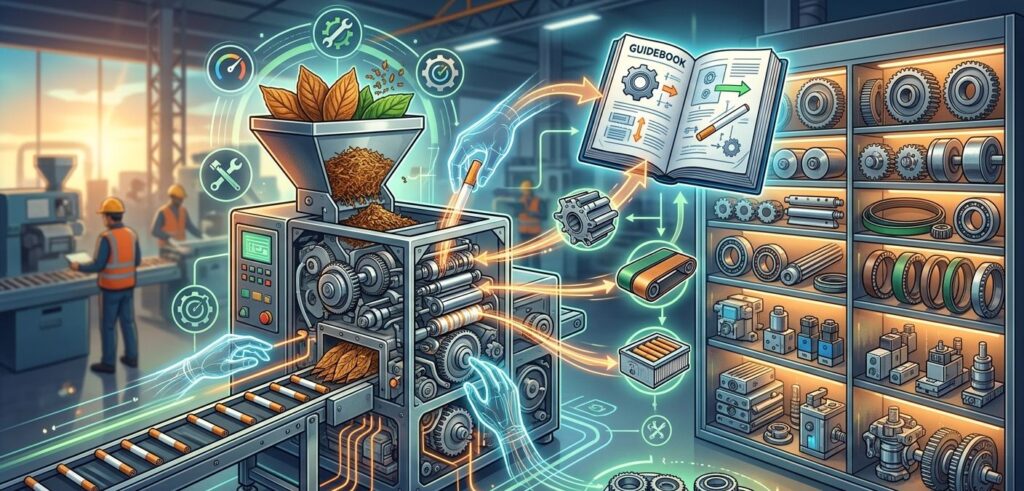
Once the blend and pack are locked, the order moves onto the factory floor. Tobacco is fed through cigarette making machines that form, cut, and filter the rod at speed, then the finished sticks move to packing machines for cartoning, overwrapping, and case packing. A single production run can involve several distinct machine types working in sequence, which is part of why factory capability matters as much as price when choosing a manufacturer.
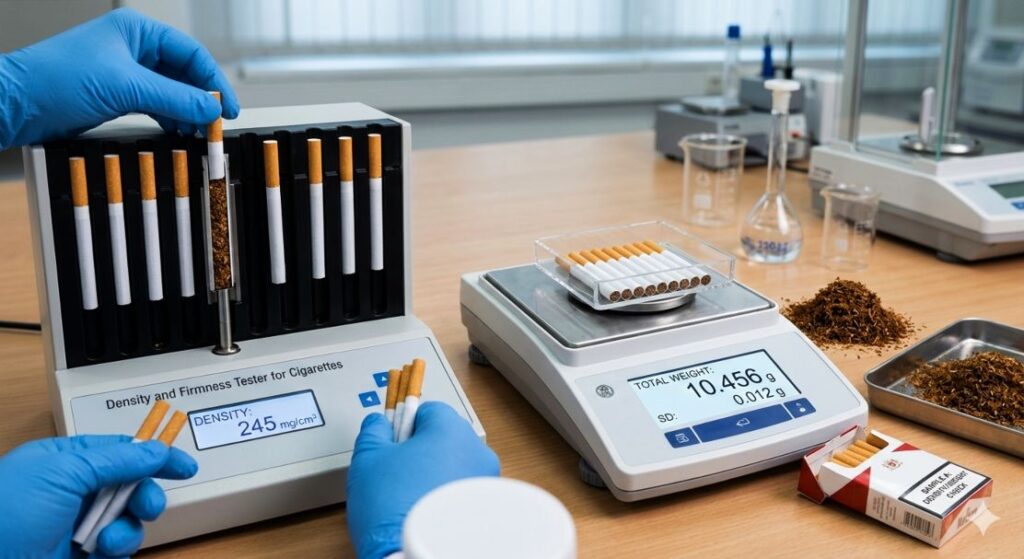
Finished product gets checked for weight consistency, draw resistance, and pack integrity before it leaves the factory. This stage catches the kind of defects that don’t show up in a small sample batch but appear once a line is running at full commercial speed.
The final stage is getting product from the factory to the client’s market, which usually means navigating export documentation, excise stamps where required, and freight forwarding. Manufacturers based in free zones, such as Jebel Ali in Dubai, often have an advantage here because of established export infrastructure and duty arrangements.
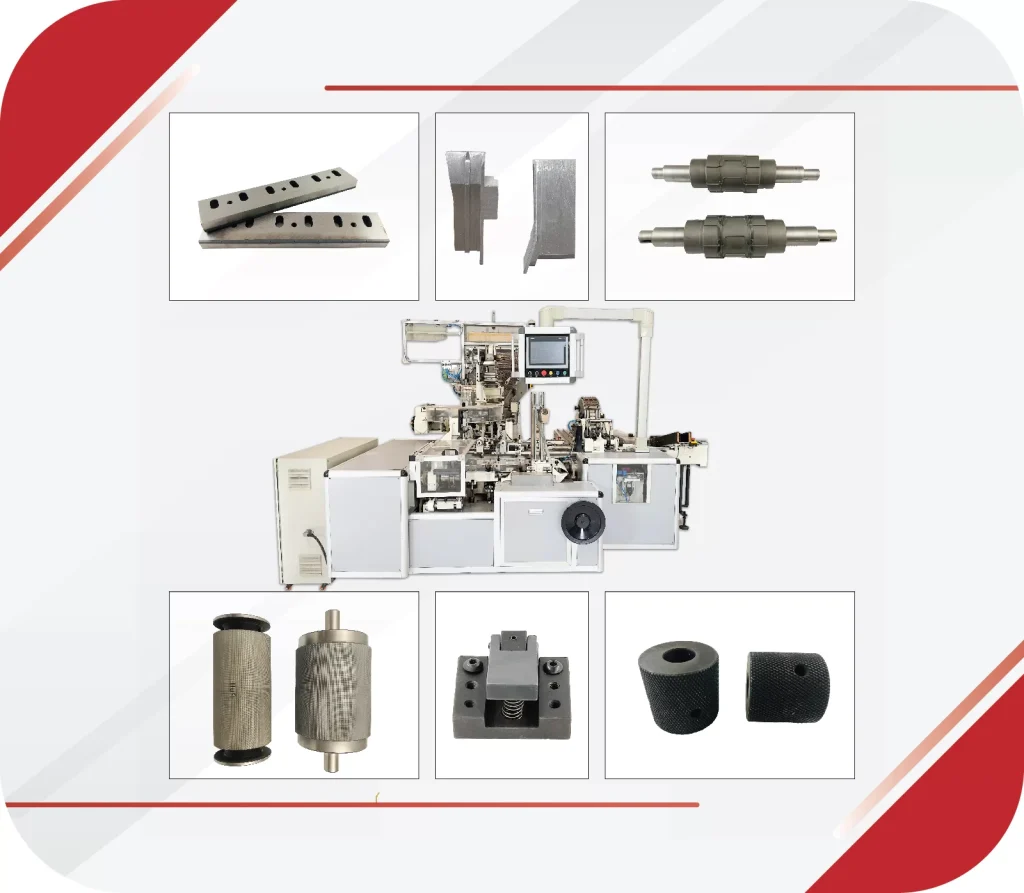
It’s worth understanding what’s actually happening on the factory floor, because the machinery a manufacturer runs directly affects what they can offer a private label client. Cigarette making machines handle the core job of forming tobacco into rod, attaching the filter, and cutting to length, and the speed and generation of these machines determines how flexible a factory can be with small or mid-sized private label runs. Cigarette filter making machines produce the filter rods that get attached during that same process, and factories with in-house filter production have more control over specification changes than those buying filters from a third party. Once the sticks are formed, cigarette packing machines handle everything from inner foil wrapping to hinge-lid or soft-pack boxing and final overwrapping, which is where most of a brand’s shelf presence actually gets built.
A factory that owns and maintains its own line across all three stages, rather than outsourcing pieces to subcontractors, generally offers tighter quality control and faster turnaround on private label orders. It’s a detail worth asking about directly when evaluating a manufacturer.
The client base is broader than most people expect. Regional distributors use it to build a branded product line without the capital cost of a factory. Retail chains and duty free operators use it to create house brands with better margins than reselling major international labels. Entrepreneurs entering the tobacco trade for the first time use it because it’s the only realistic way to launch a brand without tens of millions of dollars in machinery investment. Existing manufacturers in one country sometimes use private label arrangements with a factory elsewhere to enter a new export market without building a second plant.
A few practical factors separate a smooth private label launch from a frustrating one.
Minimum order quantities. MOQs vary considerably between manufacturers and depend on blend customization, pack format, and factory scheduling. It’s worth getting a clear MOQ figure in writing early, since it directly shapes your initial capital outlay.
Regulatory experience in your target market. A manufacturer that has already shipped private label product into your destination country will spot compliance issues before they become expensive mistakes. One that hasn’t may need you to do that homework yourself.
Lead time and production flexibility. Ask how the factory schedules private label runs alongside its own brands, and how much notice they need for reorders. Seasonal demand spikes catch new brand owners off guard more often than any other part of this process.
Transparency on where product is actually made. Some intermediaries broker private label deals without owning a factory at all, adding a markup and a layer of communication delay between the client and the actual production line. Working directly with the manufacturer tends to be faster and more accountable.
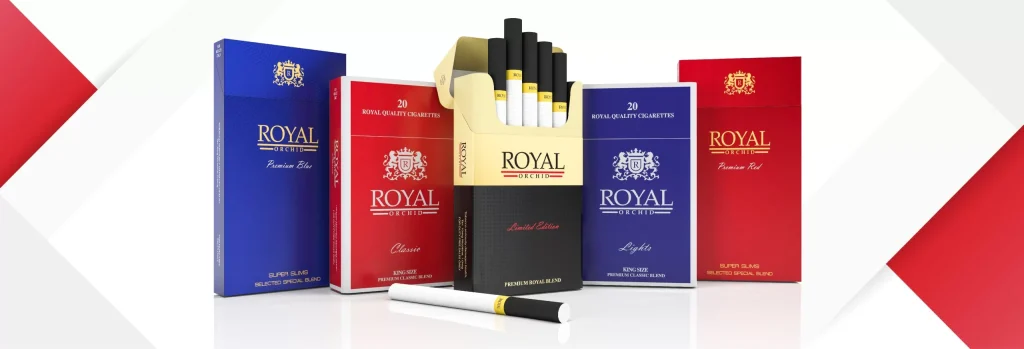
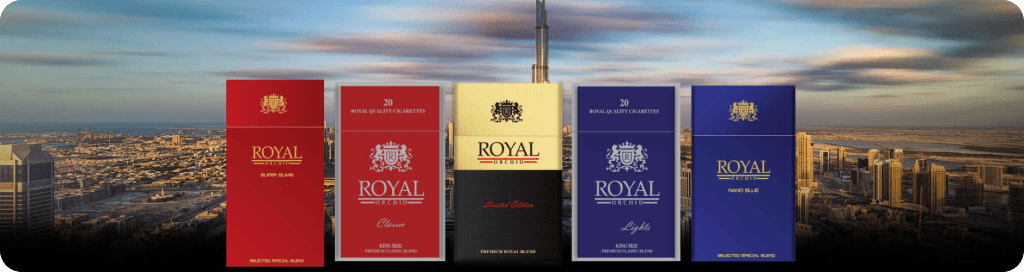
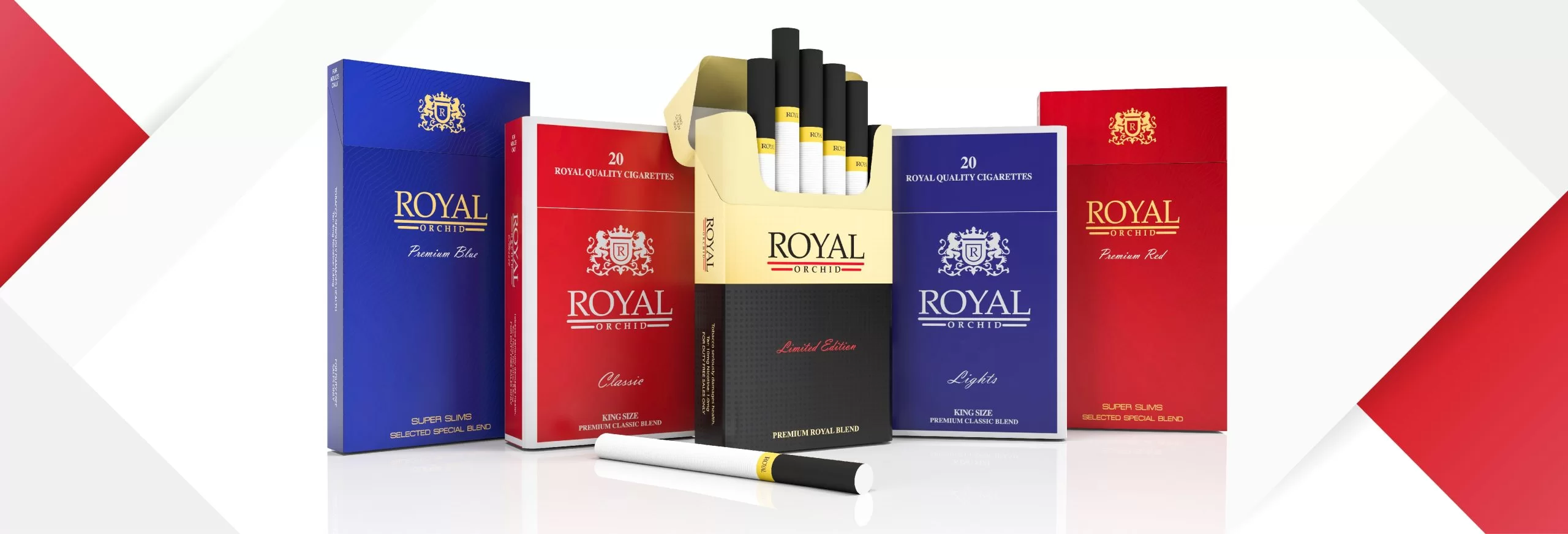
Orchid Tobacco has run cigarette manufacturing operations in the UAE for more than 35 years, producing both a full range of our own cigarette brands and private label cigarettes on a contract basis from our facilities in Jebel Ali Free Zone, Dubai, and Karachi Free Zone, Pakistan. Our own brand portfolio, which includes Royal Red, Royal Blue, Kings & Lords, and 84 Classic, runs on the exact same production lines and quality standards we apply to private label orders, which is something clients are welcome to see for themselves during a factory visit.
Because we operate our own tobacco machinery across every stage of production, from cigarette making through filter attachment to final packing, we’re able to offer new and growing brands the kind of flexibility that outsourced or brokered arrangements usually can’t match. If you’re exploring a private label cigarette brand and want to talk through blend options, packaging, or minimum order volumes, get in touch with our team to discuss your project.
Private label cigarette manufacturing gives brand owners a way into the tobacco market without the enormous capital cost of building a factory from scratch. The process runs through the same core stages regardless of manufacturer: brief, sample, packaging and compliance, production, quality control, and logistics. What varies is how well a factory executes each stage, and that usually comes down to whether they own the machinery, the experience, and the regulatory know-how to see a brand through from concept to carton.