Pull too hard on a cigarette and the draw feels choked, almost like sucking through a coffee stirrer. Pull too easily and it burns fast, delivers smoke inconsistently, and tastes thin. Neither is an accident. Both come down to a single measurable property, draw resistance, and getting it right is one of the more precise pieces of quality control in cigarette manufacturing.
This article covers what cigarette draw resistance testing actually measures, the standards behind it, how the testing is done, and what causes a batch to fall outside spec.
Draw resistance is the pressure required to pull air through a cigarette, from the tipping end through the tobacco rod and out the tip. It’s usually expressed in millimeters of water gauge (mmWG) or pascals (Pa), and it’s one of the most tightly controlled parameters in cigarette production because it directly shapes how a cigarette feels and performs when someone smokes it.
Draw resistance and pressure drop are closely related terms and get used somewhat interchangeably in the industry, though pressure drop technically refers to the same measurement taken across a filter rod or paper sample in isolation, while draw resistance refers to the full, finished cigarette.
Consistency is the entire point. A smoker who buys the same brand expects the same physical smoking experience every time, and draw resistance is a major part of that experience even though most consumers couldn’t name it. Manufacturers test it for three practical reasons.
Consumer experience. Draw resistance affects how a cigarette feels to smoke, how much effort it takes, and how smoke delivery is perceived, all of which shape brand loyalty more than most marketing does.
Production consistency. Rod density, paper porosity, and filter specification all shift draw resistance if they drift even slightly during a production run. Testing catches that drift before an entire batch goes out of spec.
Machine performance. Cigarettes with draw resistance far outside the intended range can behave unpredictably on high-speed packing lines, contributing to jams or rejects further down the production process.
Draw resistance and pressure drop measurement is governed internationally by ISO standards, with ISO 6565 setting out the standard conditions test for pressure drop and draw resistance of cigarettes and filter rods, alongside equivalent CORESTA Recommended Methods used widely across the industry. These standards specify the air flow rate, testing conditions, and calibration requirements needed for results to be comparable across different labs and manufacturers, which matters enormously when a factory is supplying multiple export markets that each expect consistent documentation.
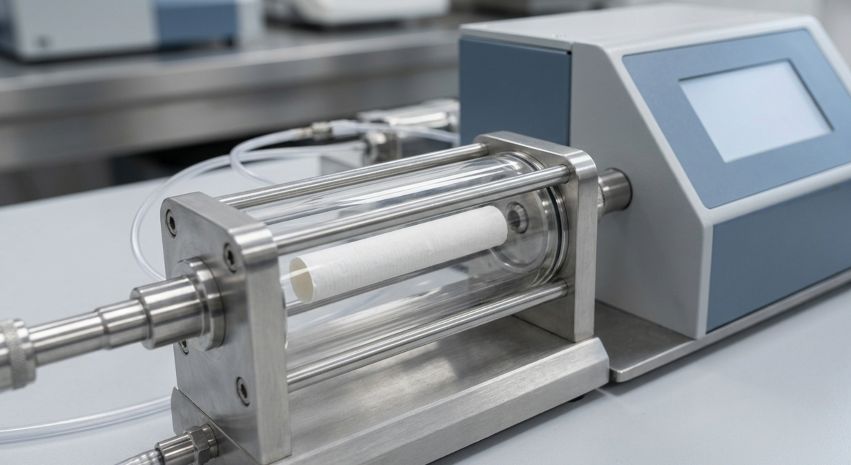
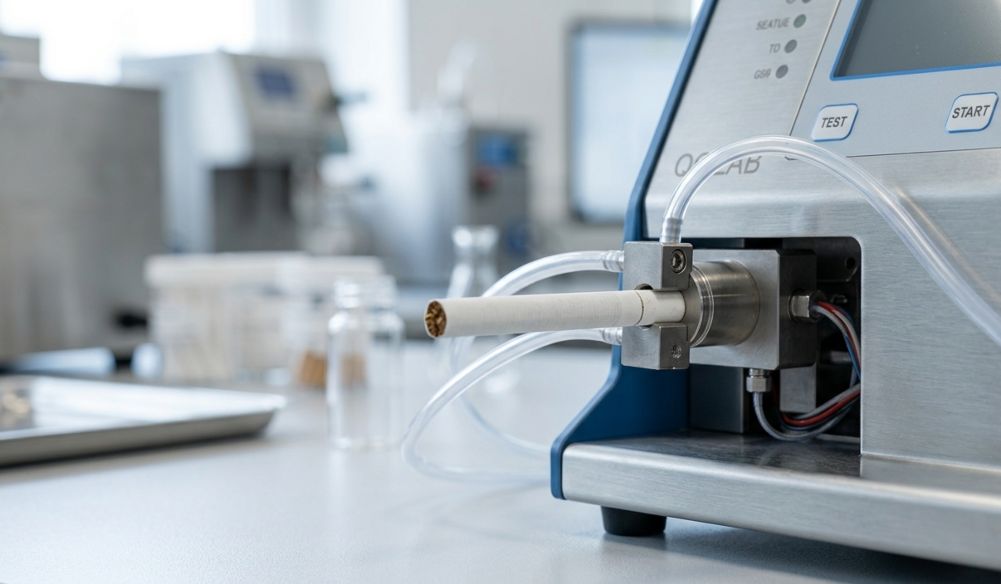
Draw resistance testing uses a dedicated tester that draws air through a cigarette sample at a fixed, standardized flow rate, typically around 17.5 cm³ per second, matching the flow rate used in standard smoking machine testing under ISO 3308. The tester measures the pressure drop generated as air moves through the rod and filter, and the reading is recorded in mmWG or Pa.
In a production environment, testing isn’t a one-off check. Samples are pulled at set intervals across a shift, sometimes from multiple points along the same production line, and results get logged against a target range and tolerance band. A single reading tells you almost nothing on its own. What matters is the trend across a run, since a gradual drift often signals a machine setting slipping out of calibration before it becomes an obvious quality problem.
Filtered cigarette draw resistance generally falls somewhere in the range of 90 to 150 mmWG, though the exact figure depends heavily on filter density, filter ventilation level, rod density, and paper porosity. Unventilated regular filters tend to sit toward the higher end of typical ranges, while cigarettes with perforated tipping paper for ventilation, common in lighter or “smooth” positioned brands, generally test lower because some of the drawn air bypasses the tobacco rod entirely through the perforations. There’s no single universal target figure across the industry. Every brand and blend has its own specified range set during product development, and testing exists to confirm production stays inside it.
Several variables move draw resistance independently, which is part of why testing has to isolate causes rather than just flag an out-of-range reading.
Filter density and ventilation. A denser filter, or one with less tipping paper perforation, increases resistance. This is usually the single biggest lever manufacturers have when designing a target draw feel.
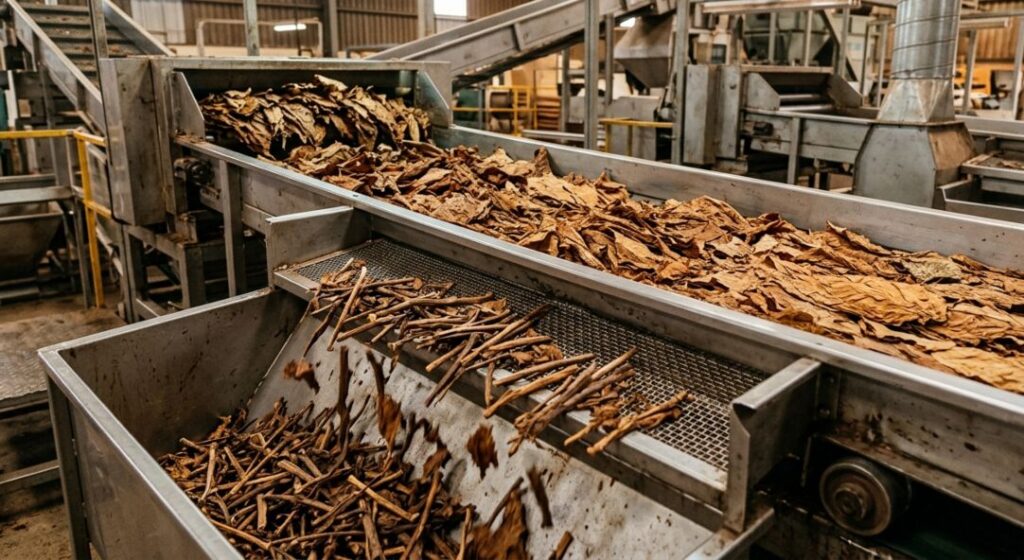
Tobacco rod density. How tightly tobacco is packed during the cigarette making process affects how freely air moves through it. Rod density that drifts during a shift is one of the more common causes of draw resistance variance on a production line.
Cigarette paper porosity. More porous paper lets air pass through the paper wall itself rather than only through the rod, lowering draw resistance and also affecting burn rate.
Environmental conditions. Humidity and temperature in the factory affect tobacco moisture content, which in turn affects rod density and, downstream, draw resistance. This is one reason conditioned tobacco storage and controlled factory humidity matter well before a cigarette ever reaches a draw resistance tester.
Too high, and the cigarette feels hard to draw on, smokers notice immediately, and the product reads as a manufacturing defect rather than a deliberate brand characteristic. Too low, and the cigarette burns faster than intended, delivers smoke less consistently puff to puff, and often tastes weaker than the blend was designed to deliver. Either direction, out-of-spec draw resistance is one of the fastest ways to damage a brand’s reputation with regular smokers, who tend to notice a change in feel well before they consciously identify what changed.
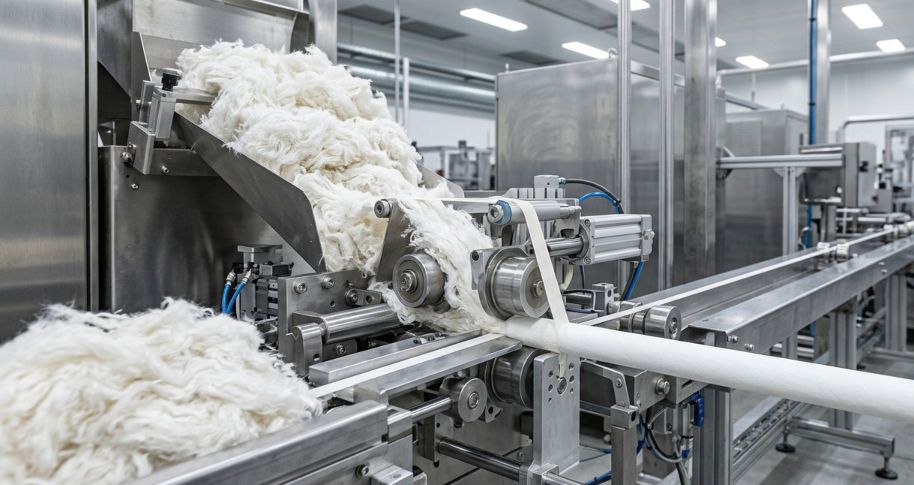
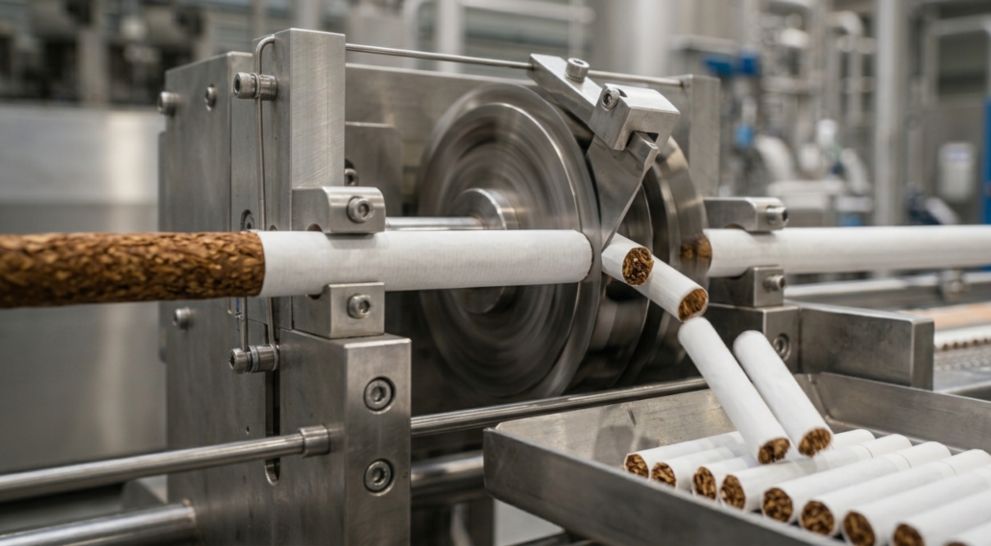
Draw resistance control starts upstream of the tester itself. It’s shaped by how cigarette making machines form and pack the tobacco rod, and by the specification of the filters produced on cigarette filter making machines. Manufacturers running their own equipment across both stages have a real advantage here, since they can trace an out-of-spec reading back to a specific machine setting rather than troubleshooting a black box supplied by a third party.
This kind of quality control applies whether a factory is producing its own brand or working on a private label or contract manufacturing order. A brand owner sourcing production from a third-party factory should ask directly how draw resistance testing is built into that manufacturer’s quality process, since it’s one of the clearest indicators of whether a factory runs disciplined, repeatable production.
Draw resistance testing is a small, precise measurement with an outsized effect on how a cigarette actually performs in someone’s hand. It ties together rod density, filter specification, paper porosity, and machine calibration into a single number that either matches a brand’s intended feel or doesn’t. For manufacturers, consistent testing throughout a production run is what keeps a brand’s smoking experience identical from the first cigarette in a batch to the last, and for anyone sourcing production from a third-party factory, it’s one of the most telling questions to ask before committing to an order.