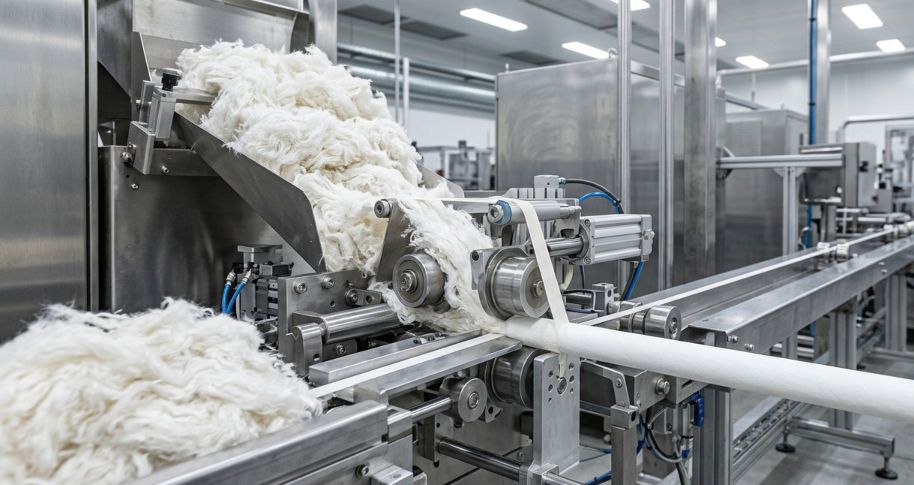
Primary tobacco processing generates a lot of material that never looks like usable leaf again once the good stuff has been stripped, graded, and cut, stems, small leaf particles, dust, and scrap left over from stemming and cutting operations. Discarding it outright would waste a meaningful share of every harvest. Tobacco reconstituted sheet manufacturing turns that leftover material back into a usable, consistent filler component, and it’s become a standard part of nearly every modern cigarette blend.
This article covers what reconstituted tobacco sheet actually is, the two main manufacturing methods used to produce it, and why it plays such a central role in blend design.
Reconstituted tobacco sheet, often shortened to RTS or simply called sheet tobacco, is a manufactured filler material made from tobacco byproducts, primarily stems, small leaf particles, and dust generated during primary processing, that have been pulped, formed into a continuous sheet, dried, and cut into a shape usable alongside natural leaf in cut filler blends. It isn’t a filler substitute or an artificial additive. It’s tobacco material that would otherwise be waste, reprocessed into a form the manufacturing line can actually use.
Material yield. A significant portion of harvested tobacco ends up as stems, fines, and processing scrap rather than intact leaf. Reconstitution recovers that material rather than treating it as waste, improving overall yield from every batch of raw tobacco purchased.
Blend consistency. Because the pulping process breaks material down before reforming it into sheet, RTS can be engineered to a highly consistent composition, which helps stabilize blend characteristics that might otherwise vary batch to batch with natural leaf.
Controlled nicotine and tar contribution. During processing, soluble compounds including nicotine and sugars can be extracted from the raw material and then reintroduced onto the sheet in a controlled, measured way, giving manufacturers a genuine engineering lever over a blend’s tar and nicotine profile that raw leaf alone doesn’t offer.
Cost management. Reconstituted sheet is generally less expensive to produce than an equivalent volume of premium graded leaf, so it also serves as a practical cost-control component within a blend without necessarily compromising the finished product’s core characteristics.
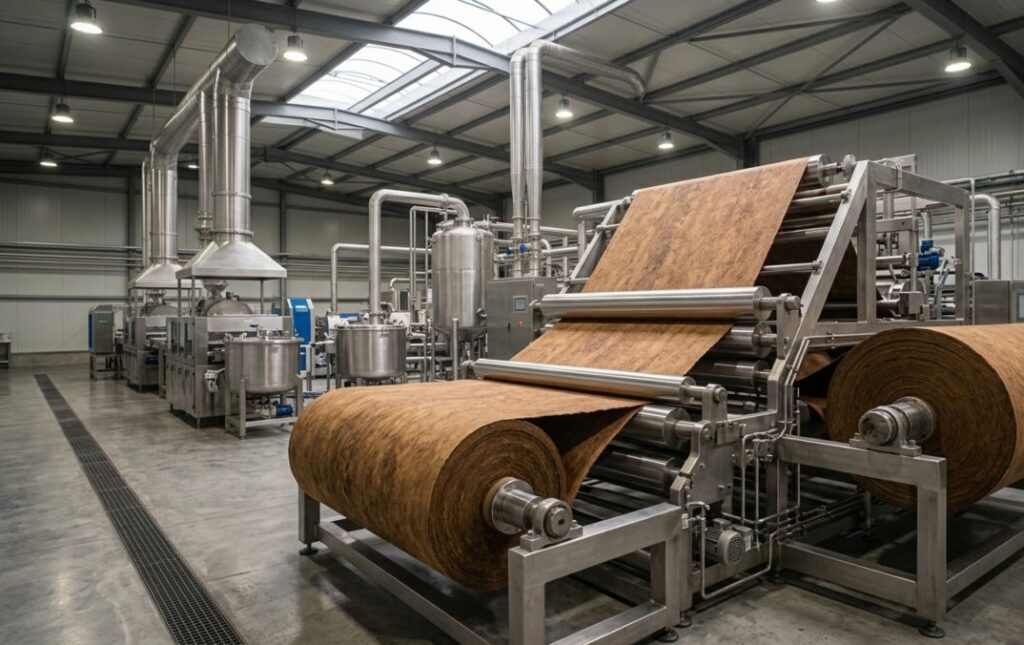
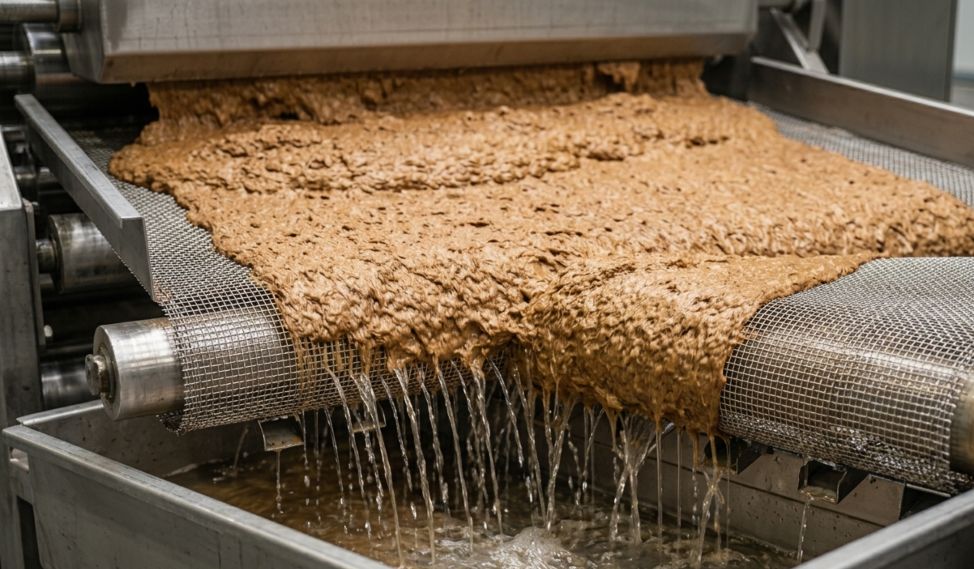
This method closely resembles conventional papermaking. Tobacco byproduct is pulped with water into a slurry, then formed into a continuous sheet on a moving wire mesh, similar in principle to a Fourdrinier papermaking machine. Water drains and is pressed out as the sheet forms, and the material is then dried into a continuous roll. The paper process tends to produce a lighter, more uniform sheet and has been the more established of the two methods for decades.
In this method, ground tobacco material is processed into a fine slurry and then cast onto a moving belt or drum in a thin, controlled layer, closer in concept to casting a film than to papermaking. The cast layer is dried directly on the belt into a continuous sheet. This method often produces a sheet with a texture and appearance closer to natural leaf, and it’s frequently used where blend quality and mouthfeel are a higher priority than pure cost efficiency.
Both methods are in active industrial use today, and the choice between them often comes down to the target blend’s price positioning and the specific handling characteristics a manufacturer needs from the finished sheet.
Stems, leaf fragments, dust, and cutting scrap generated during primary tobacco processing are collected rather than discarded, forming the raw input for reconstitution.
The raw material is ground and mixed with water into a pulp or slurry. In many processes, soluble compounds such as nicotine and natural sugars are extracted from this pulp at this stage, held separately, and measured back into the mix later in a controlled ratio.
The pulp is formed into a continuous sheet using either the paper process or the cast-leaf process described above, depending on the manufacturer’s equipment and target product.
The formed sheet is dried to remove excess moisture, a step that has to be controlled carefully since drying too quickly can cause the sheet to become brittle and prone to tearing during later handling.
Nicotine and other soluble compounds extracted earlier in the process are reapplied to the dried sheet in a precisely measured amount, restoring the material’s nicotine contribution in a controlled, repeatable way rather than leaving it to whatever the raw byproduct happened to contain.
The finished sheet is cut into strips or shreds sized to match the manufacturer’s cut filler specification, then moisture-conditioned to the level required for blending.
Cut reconstituted sheet is blended into the final filler mix alongside natural leaf and, in many blends, expanded tobacco, at a ratio the manufacturer sets during product development.
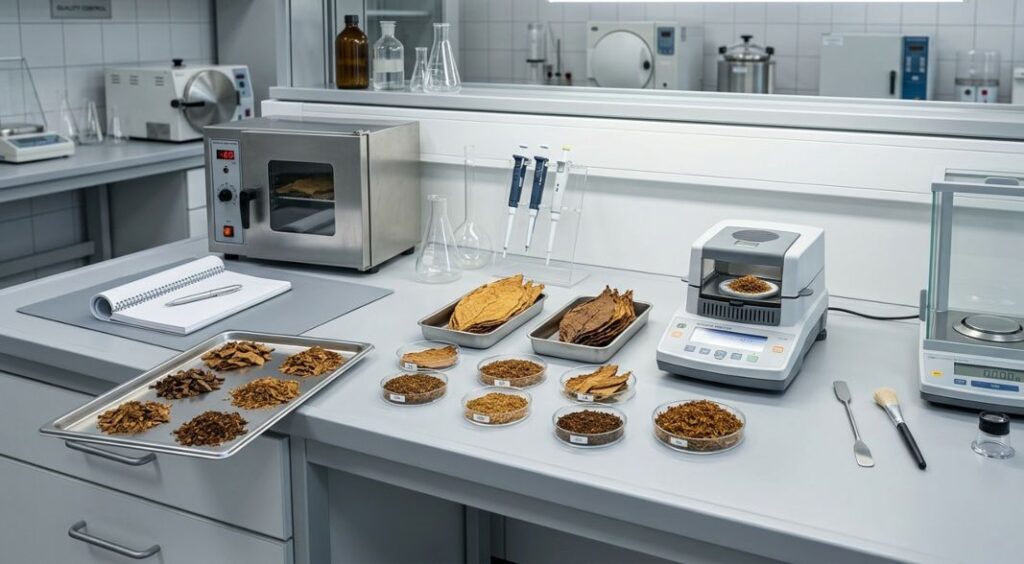
Reconstituted sheet is checked on several fronts before it’s approved for blending. Moisture content has to sit within a defined range, since sheet that’s too dry becomes brittle and generates excess dust when cut, while sheet that’s too wet can cause handling and storage problems. Tensile strength and sheet integrity matter because reconstituted material moves through cutting and blending equipment under mechanical stress, and a weak sheet tears and fragments in ways that create inconsistent cut filler. Thickness uniformity is also closely monitored, since an inconsistent sheet burns unevenly once blended into the finished rod.
These two engineered filler components solve different problems and are frequently confused. Reconstituted sheet recovers and repurposes tobacco byproduct that would otherwise be discarded, turning waste material into usable filler. Expansion, by contrast, physically increases the volume of natural leaf tobacco without changing its underlying material. Most modern blends use both alongside untreated leaf, each contributing a different combination of cost efficiency, volume, and consistency. Our guide to the tobacco expansion process covers that side of blend engineering in more detail.
Reconstituted sheet is prepared well upstream of final blending and cigarette forming, then fed into the blend alongside natural leaf before reaching cigarette making machines. Because its physical characteristics, density, moisture behavior, and handling properties, differ from natural leaf, the ratio of reconstituted sheet in a blend is usually fixed as part of the product’s core specification rather than adjusted casually run to run.
For brand owners working through private label or contract manufacturing arrangements, reconstituted sheet ratio is generally a manufacturer decision tied to cost targets and blend consistency rather than something a first-time brand owner needs to specify directly, though it’s a reasonable question to ask when comparing manufacturers on cost and quality positioning.
Tobacco reconstituted sheet manufacturing turns a byproduct stream that used to be discarded into a genuinely useful, engineered component of modern cigarette blends. Whether produced through the paper process or the cast-leaf process, the goal is the same: recover material value, stabilize blend consistency, and give manufacturers a real lever over nicotine and tar delivery that raw leaf alone can’t offer. It’s one of the less visible pieces of cigarette manufacturing, but it plays a meaningful role in how a modern blend is actually engineered.
Important: Check Tobacco Machinery
Also Check: Cigarette Filter Making Machines