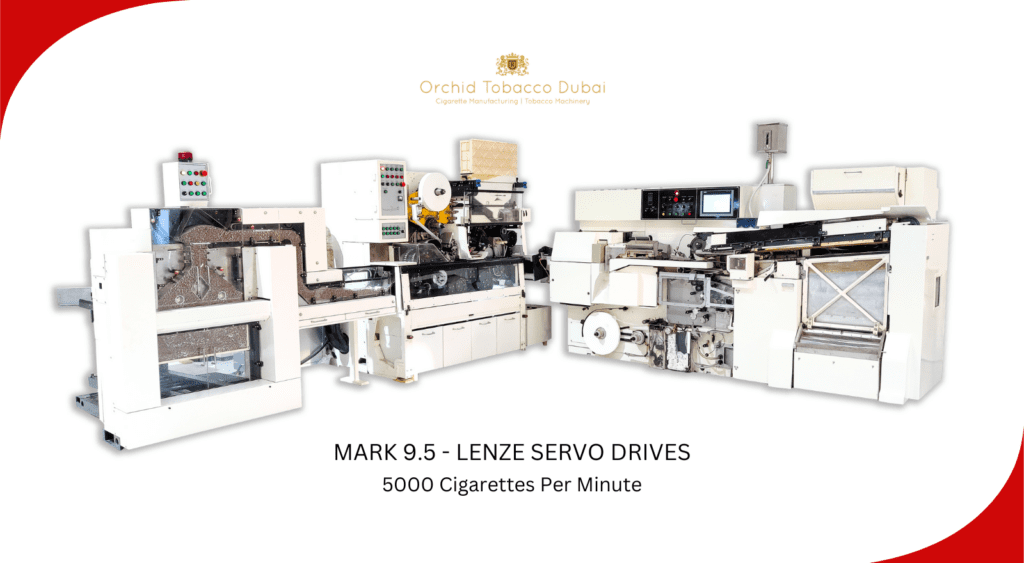
Cigarette manufacturing machines run on a demanding combination of precision, speed, and efficiency, and none of that happens by accident. In an industry where consistency is the whole product promise, the control systems driving the machinery matter as much as the mechanical design itself. One of the more significant advances on this front is the use of Lenze servo drives in the Molins Mark 9 cigarette making machine. This guide covers what servo drives actually do differently from older drive systems, the full Mark 9.5 specification, and why this particular upgrade matters for anyone running or evaluating this machine.
Cigarette manufacturing has moved a long way from manual rolling to highly automated, precision-driven production. Modern machines produce thousands of cigarettes per minute while holding remarkable consistency, something that simply wasn’t achievable with earlier mechanical designs. Every stage, from cutting and blending tobacco through wrapping and packaging, is now controlled with a level of precision that used to require far more manual oversight.
Servo drives are a core component of modern automation, delivering precise control, tight synchronization, and better energy efficiency than older drive systems. The distinction matters most against the alternative: traditional cam-driven or fixed-timing mechanical systems run at a set mechanical rhythm that’s difficult to adjust without physically reconfiguring the machine. Servo drives replace that fixed timing with programmable motion control, meaning speed, torque, and positioning can all be adjusted electronically rather than mechanically. (View Cigarette Machinery Spare Parts)
Even minor mechanical variation shows up as a quality problem in cigarette manufacturing, whether that’s rod weight drift or an inconsistent cut. Lenze servo drives give the Mark 9.5 tighter control over its moving components than fixed-timing systems can manage, which is what actually holds quality standards steady across a full production run rather than just at the start of one.
Keeping multiple machine components moving in coordinated sync is what prevents jams and misalignment on a high-speed line. Servo drives handle that synchronization electronically, adjusting in real time rather than relying on a fixed mechanical linkage that can drift out of alignment over thousands of cycles. That’s a meaningful part of why servo-equipped machines tend to hold uptime better over long production runs.
Different stages of cigarette production genuinely need different speeds, and Lenze servo drives make that kind of stage-specific speed regulation possible without a full mechanical changeover. The machine adjusts speed electronically at each stage, which keeps output high without forcing a quality trade-off at any single point in the process.
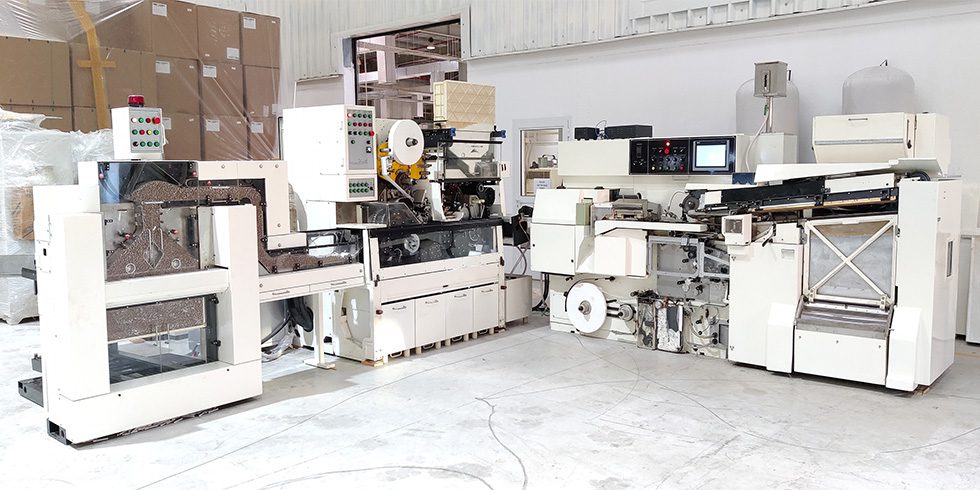
The Molins Mark 9.5 is a proven platform in cigarette manufacturing, and the Lenze servo variant specifically is built for factories that need precision and consistency more than they need raw top-end speed. Here’s the full specification.
The Mark 9.5 with Lenze servo drives runs at up to 3,500 cigarettes per minute (cpm) for regular diameter, and 3,200 cpm for slim and super slim variants. That’s slower than some other Mark 9 configurations, a deliberate trade-off of top speed for the precision and lower scrap rate that servo control delivers. (View Complete Tobacco Machinery)
The machine handles a circumference range of 17mm to 28.3mm and filter plus tobacco rod lengths from 65mm to 110mm, giving manufacturers real format flexibility without needing to reconfigure the machine for every product variant. (Also Check Mark 8 Cigarette Making Machine)
A SIEMENS PLC control system governs the entire manufacturing process, integrating the machine’s components into one coordinated system rather than a set of independently timed units. That integration is what makes the servo system’s precision actually translate into consistent output rather than just isolated component-level accuracy.
A microwave-based weight control system keeps cigarette weight consistent, measuring and correcting in real time to prevent the kind of variation that shows up as an out-of-spec batch further down the line.
The Lenze servo system is what actually sets this configuration apart from other Mark 9 variants. It handles synchronization, speed regulation, and energy efficiency together as one coordinated system, rather than treating each as a separate mechanical problem to solve.
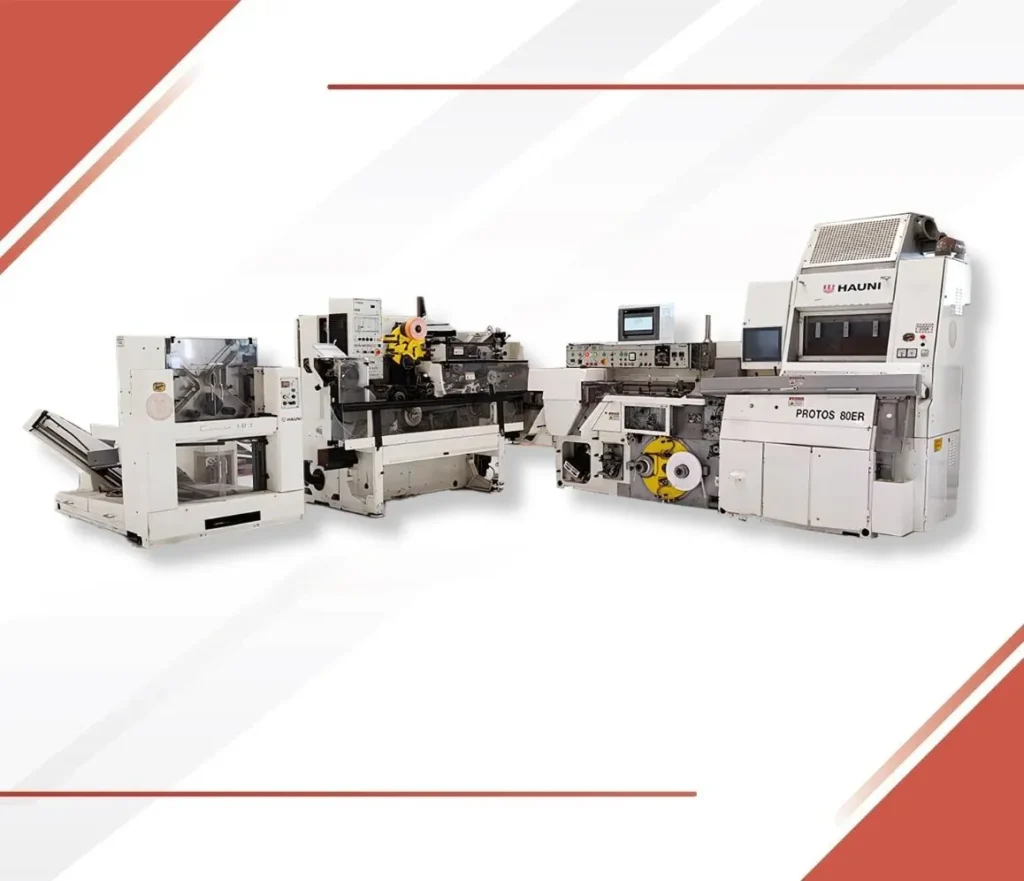
The Mark 9.5 comprises three coordinated units: the MK-9.5 cigarette maker, the MAX-S filter assembler, and the HCF80 auto tray filler. These work as a single balanced system rather than independently specified components, which is part of why sourcing this exact configuration matters when replacing or upgrading a line.
Power draw runs across three units: 35KW for the MK-9.5, 20KW for the MAX-S, and 15KW for the HCF80, a total of 70KW. Total machine weight is approximately 8,600 KG, reflecting the robust build needed to hold precision at speed over a sustained production run.
Servo drives deliver real, measurable advantages over older drive systems, and it’s worth breaking down exactly where those gains show up. (Check Tobacco Machinery Spare Parts)
Energy cost is a real line item in high-speed manufacturing, and Lenze servo drives manage power more efficiently than fixed-speed mechanical systems, since they draw power proportional to actual demand at each stage rather than running at a constant rate regardless of load. That efficiency compounds meaningfully across a three-shift operation. Manufacturers running a servo-equipped Mark 9.5 alongside cigarette packing machines often see the energy savings extend across the full line, not just the maker itself.
Manufacturers running multiple cigarette formats or switching between production runs benefit directly from servo flexibility. Because servo drives are programmable rather than fixed, they can be reconfigured for a new product spec without the mechanical retooling older systems required, which matters most for factories with a varied production portfolio rather than a single fixed product line.
Moving from a fixed-timing mechanical system to servo control changes what maintenance actually looks like day to day. Servo motors and drives are electronically monitored, which means developing issues, a drift in torque or positioning accuracy, for example, tend to show up as a diagnostic alert well before they’d cause a visible mechanical fault on an older system. That earlier warning is one of the more underappreciated benefits of servo control: it shifts maintenance from reactive to genuinely predictive, provided the diagnostic data is actually being monitored rather than ignored until something fails outright.
Why does the Lenze servo variant of the Mark 9.5 run slower than other Mark 9 configurations?
It’s a deliberate trade-off. The servo system prioritizes precision and consistency, tighter synchronization and lower scrap, over the raw top-end speed some other configurations are built for. For factories where waste reduction matters more than peak CPM, that trade-off usually pays off.
Can a Mark 9 machine be retrofitted with Lenze servo drives, or is it only available as a factory configuration?
This depends on the specific machine’s existing control architecture. Retrofits are sometimes possible but need to be evaluated case by case against the machine’s current PLC and drive setup, since not every base configuration is built to accept a servo retrofit cleanly.
What’s the practical difference between Lenze and other servo systems used in cigarette machinery, like Beckhoff?
Both deliver the same core benefits: precise, programmable motion control. The choice often comes down to which platform a factory’s maintenance team already has experience with, since parts availability and technician familiarity affect real-world repair time more than any inherent performance gap between the two systems.
The integration of Lenze servo drives in the Molins Mark 9 cigarette making machine represents a genuine step forward in cigarette manufacturing technology, not just an incremental spec bump. Precise control, tight synchronization, adjustable speed regulation, and better energy efficiency together are what actually translate into consistent product quality on the floor.
For industrial engineers, automation specialists, and manufacturing professionals, understanding what servo drives change mechanically, not just that they’re “more advanced,” is what actually helps in evaluating whether this configuration fits a specific production line.