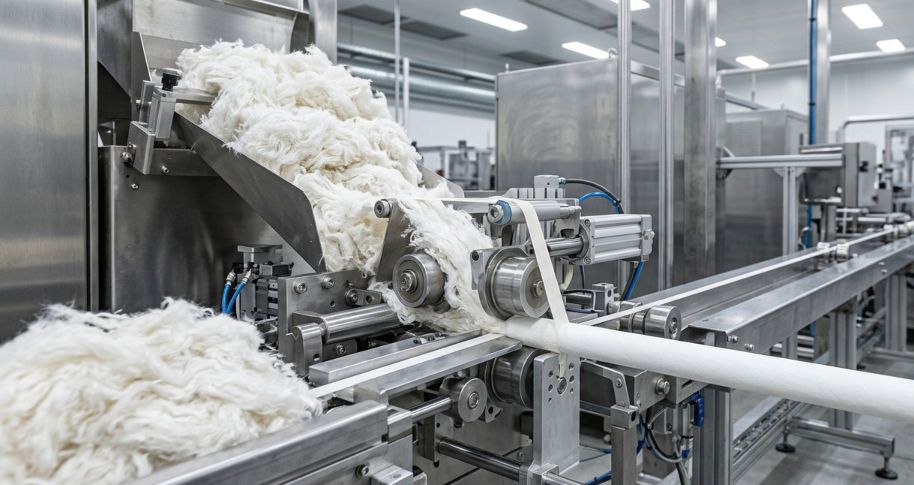
Two cigarettes from the same brand, bought a decade apart, should taste identical. That consistency doesn’t come from the tobacco leaf itself, since no two harvests are alike. It comes from the blending stage, where a tobacco blending machine (also called a tobacco mixer) combines different leaf types, stems, reconstituted tobacco, and casing or flavoring liquids into a single uniform, homogenous blend. Blending is what actually locks in the taste, burn characteristics, and aroma that define a cigarette’s signature profile, batch after batch.
At Orchid Tobacco, blending machines sit within the broader Tobacco Machinery lineup, and they carry more weight than their position in the line suggests. Every batch of tobacco has to clear production, quality, and flavor standards at this stage before it ever reaches a Cigarette Making Machine.
Why Use a Tobacco Blending Machine?
Blending isn’t just about mixing leaves. It’s about producing consistency across batches that might run into the millions of cigarettes. A few reasons blending machines are non-negotiable in modern production:
- Flavor Uniformity: Virginia, Burley, and Oriental tobaccos each bring distinct characteristics to a blend. Getting the proportions right, batch after batch, is what preserves the intended flavor profile.
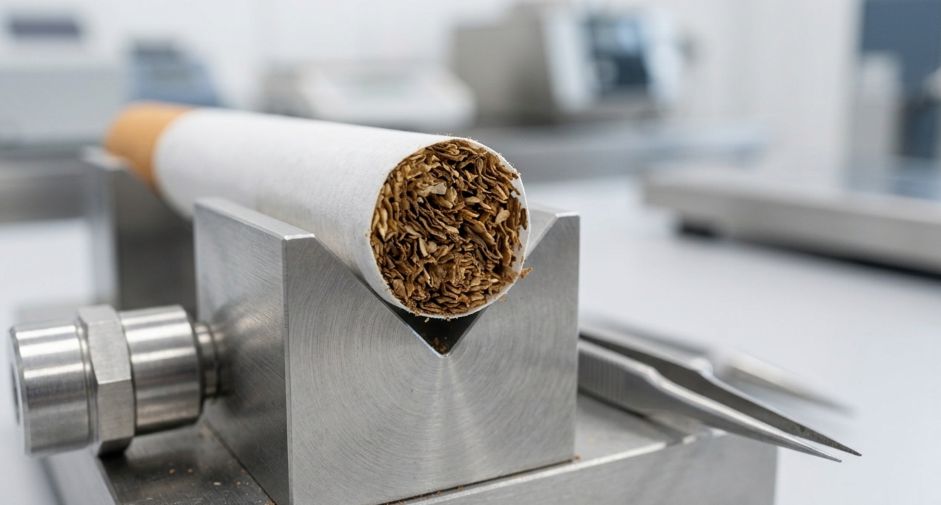
- Physical Homogeneity: A properly blended mix has uniform moisture, density, and strand size, which is what lets downstream machines run without the jams and inconsistencies that uneven tobacco causes.
- Efficient Additive Distribution: Flavorings, casing liquids, and humectants only work as intended if they’re distributed evenly. Blending machines are built to make sure that happens rather than leaving pockets of concentrated additive.
- Production Scalability: Large blending systems handle high volumes without the quality dropping off, which is what makes high-throughput production actually viable.
- Quality Control: Silos and blending bins let manufacturers sample, test, and adjust a blend in real time, before it ever reaches the cutting or rod-forming stage.
How Tobacco Blending Machines Work
The blending process inside a modern machine generally runs through six stages:
- Tobacco Feeding: Cut tobacco (lamina, stem, or reconstituted) is loaded into the blending chamber or silo.
- Liquid Injection (if needed): Casing liquid, typically water carrying sugars, humectants, or flavorings, is sprayed into the blend.
- Mixing: Internal paddles, plows, or agitators rotate to work the tobacco into a thorough, even mix.
- Aeration and Recirculation: Some machines periodically lift and recirculate the tobacco specifically to prevent layering, which is one of the more common causes of inconsistent blends.
- Temperature and Moisture Control: Sensors track moisture and temperature throughout, triggering steam or airflow adjustments as needed to keep the blend within target range.
- Discharge: The finished blend moves on to conditioning units, storage silos, or directly into Cigarette Making Machines.
Types of Tobacco Blending Machines
The right machine depends on production volume, blend complexity, and how the line is laid out:
- Vertical or Horizontal Drum Mixers / Cylinders: Common on primary processing lines. These rotate slowly to gently tumble the tobacco without breaking down leaf structure.
- Silo Blenders / Mixing Bins: Large storage silos fitted with internal mixers and recirculation systems, built for continuous blending rather than batch runs.
- Continuous Belt or Screw Mixers: Suited to constant-feed operations, since they move tobacco while mixing rather than holding it in place.
- Vacuum / Steam Blending Systems: Use vacuum or steam to open leaf pores, which helps casing liquid penetrate more effectively than surface spraying alone. Vacuum conditioning specifically raises lamina moisture and temperature to improve absorption.
Key Parameters in Tobacco Blending
A few variables determine whether a blend comes out right, and they’re the ones operators watch most closely:
- Mixing Time: Long enough to fully homogenize the blend, but not so long that the leaf structure starts to break down.
- Agitator Speed: Has to be fast enough to mix thoroughly without shredding the leaf or damaging fiber, which is a narrower window than it sounds.
- Liquid Spray Rate: Casing, flavoring, and humectant application is controlled precisely, since even small variance in spray rate shows up as flavor inconsistency later.
- Temperature and Humidity: Kept within a tight band, typically targeting an oven volatiles (moisture) level around 12 to 14%, to avoid microbial growth while preserving leaf quality and blend stability.
- Flow Rate / Throughput: The blender’s output has to match the speed of both the upstream feed and the downstream cutting or rod-forming equipment, or the whole line ends up bottlenecked at the blender.
Impact on Downstream Processes
A poorly blended batch doesn’t just taste wrong. It causes measurable problems at every later stage:
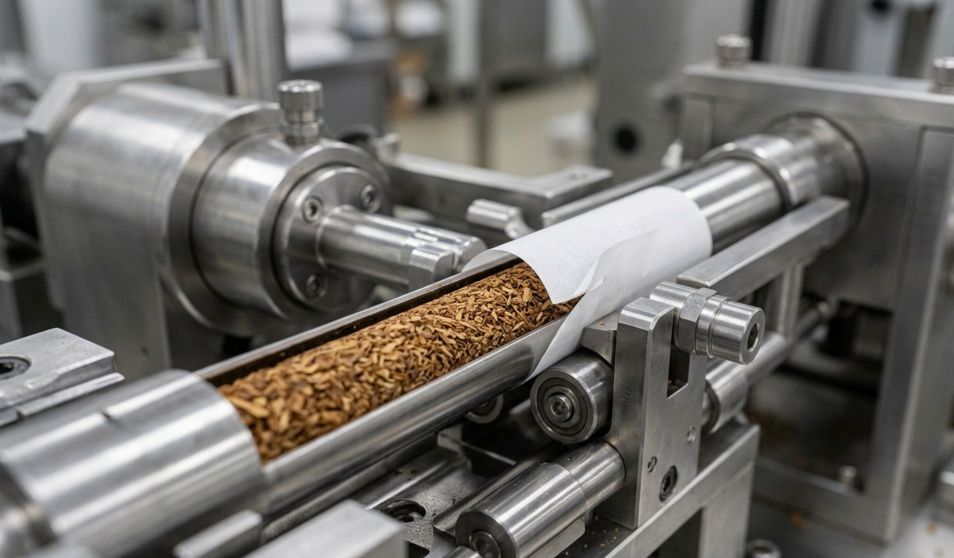
- Cigarette Making: Uniform blend density helps Cigarette Making Machines form stable tobacco rods with consistent draw resistance, rather than rods that vary from one cigarette to the next.
- Filter Attachment: A stable, consistent blend reduces reject rates at the filter-attaching stage, since uneven rod density is a common cause of misaligned filter joins.
- Packing Efficiency: Well-blended tobacco behaves predictably in Cigarette Packing Machines, cutting down on blockages and uneven fill.
- Final Product Quality: A homogeneous blend is ultimately what a consumer is actually tasting, so this stage has more influence on final product quality than almost any other in the line.
Challenges and Best Practices in Blending
Even with modern machinery, blending has a handful of persistent failure points, along with clear ways to manage them.
Common Challenges
- Variability in raw leaf moisture or density from batch to batch
- Over- or under-distribution of casing liquids across the blend
- Incomplete mixing that leaves batch irregularities behind
- Contamination or segregation of the blend during discharge
Best Practices
- Use high-precision tobacco machinery with digital control over every mixing parameter, rather than relying on operator judgment alone.
- Clean equipment on a regular schedule to prevent flavor carryover between batches, particularly when switching blend formulas.
- Log moisture, temperature, and blend component weights for every batch, so any quality issue can be traced back to its actual cause.
- Use silo-based blending systems to buffer between blending and cutting, which absorbs minor throughput mismatches instead of letting them cascade downstream.
- Train operators to spot unblended pockets or layering early and to run corrective recirculation before the batch moves on.
Matching Blender Throughput to the Rest of the Line
One of the most common line-design mistakes is sizing a blending machine around peak leaf intake rather than around the actual downstream bottleneck. A blender that outpaces the cigarette maker or packer feeding from it doesn’t add value, it just creates a buffer of blended tobacco waiting around, which increases the risk of moisture drift and quality drop before that tobacco ever reaches the rod-forming stage. Sizing the blender to match sustained downstream throughput, with a modest buffer rather than a large one, is usually the more reliable approach for consistent quality.
Why Blending Matters for Cigarette Brands and Quality
For a brand, blending is more than a production step. It’s part of the product promise itself:
- A consistent blend means every pack tastes the same, which is what actually reinforces brand identity over time.
- In premium markets such as Cigarette Brands Dubai, precise blending contributes directly to the smoothness and consistency that drive consumer loyalty.
- Reliable blending reduces waste, rejects, and off-spec batches, which affects profitability and sustainability at the same time.
How Blending Machines Fit Into Orchid Tobacco’s Machinery Portfolio
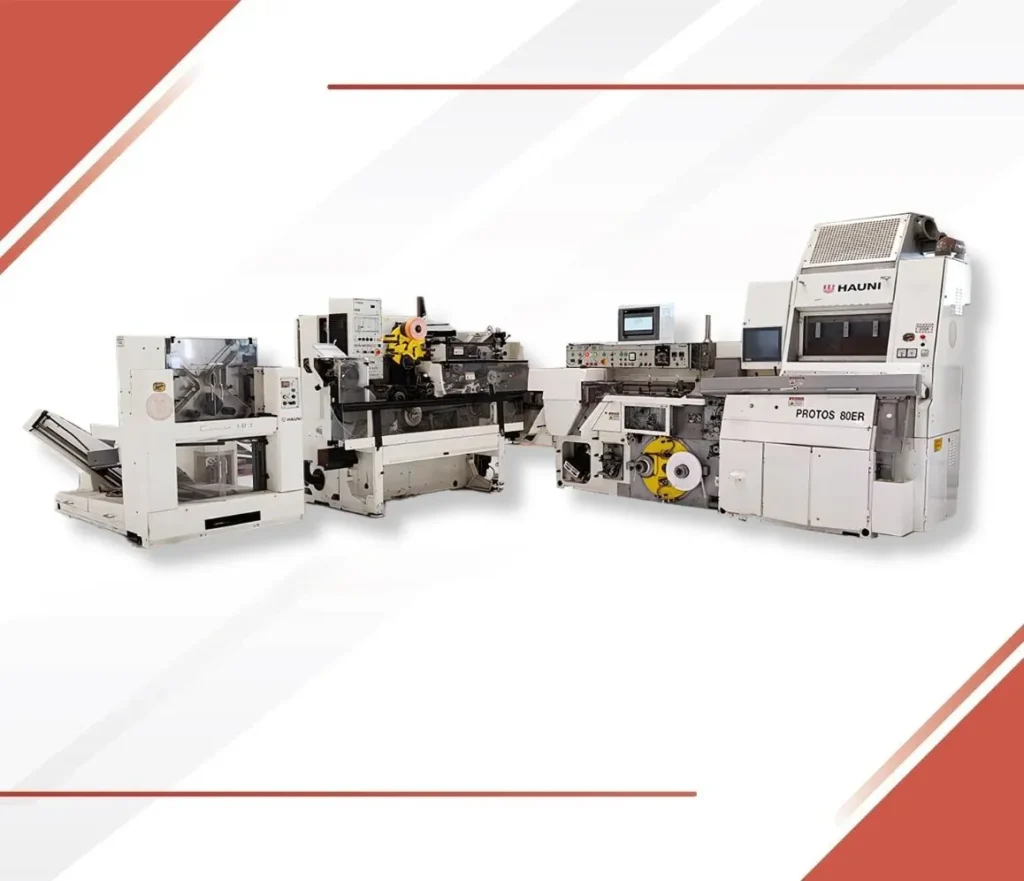
At Orchid Tobacco, blending machines are one piece of a full production suite built to move tobacco from raw leaf to finished cigarette without a quality gap at any stage:
Frequently Asked Questions
How long does a typical blending cycle take?
It depends on batch size, blend complexity, and machine type, but the target is always the same: long enough to fully homogenize the mix without over-processing the leaf. Continuous blenders run on a different logic entirely, since tobacco moves through in a steady stream rather than a discrete batch cycle.
What happens if a blend isn’t mixed thoroughly enough?
Incomplete mixing shows up downstream as inconsistent rod density, uneven draw resistance, and a higher reject rate at the filter attachment stage, all of which trace back to the blending step even though the defect isn’t visible until later.
Can one blending machine handle multiple blend formulas?
Yes, provided the equipment is cleaned thoroughly between batches to avoid flavor carryover. This is one of the more common quality issues in facilities running several brands or blend formulas through shared equipment.
Why does moisture control matter so much during blending?
Moisture levels that drift outside the target range affect both product safety and blend stability. Too much moisture risks microbial growth during storage; too little affects how casing liquids absorb into the leaf and how the blend performs in the cigarette maker.
Conclusion
A tobacco blending machine is a cornerstone of modern cigarette manufacturing, combining precision engineering with careful process control to produce consistent, high-quality tobacco blends batch after batch. By mixing different tobacco types and applying casing or flavoring liquids under controlled conditions, these machines protect brand identity, improve production efficiency, and set up every downstream stage, cutting, making, and packing, for success.
Orchid Tobacco’s Tobacco Machinery lineup includes blending systems built to integrate seamlessly with our Cigarette Making Machines and Cigarette Packing Machines, supporting production for local markets like Cigarette Brands Dubai as well as global exports.