In the world of cigarette manufacturing machines, precision and efficiency aren’t optional, they’re the whole job. One of the more overlooked components in that chain is the tobacco cutting machine, the equipment that turns processed tobacco leaf into the uniform shred every cigarette actually depends on for consistent burn and flavor.
This guide covers what these machines actually do, a closer look at the Hauni Tobacco Cutter KT-400 specifically, and where tobacco stem flatteners fit into the same production stage. Whether you’re a tobacco industry professional, a machinery buyer, or a factory owner, this is the level of detail that actually matters for evaluating this equipment. (Do you know about the Tobacco Stem Flattener?)
Tobacco cutting machines process raw, conditioned tobacco leaf into uniform strips, or shreds, suitable for cigarette production. Cut width matters more than it might seem: it’s typically measured in cuts per inch, and it directly affects how the tobacco burns, how tightly it packs into a rod, and how the finished cigarette draws. Too coarse a cut and the rod won’t hold together consistently; too fine, and burn rate and flavor delivery shift in ways that change the product entirely. (View Our Tobacco Machinery)
Industrial tobacco cutters handle this at volume using sharp knives and precision drive mechanisms that slice through the leaf while preserving fiber integrity and keeping wastage to a minimum. Getting cut width right and consistent is what makes the blending and conditioning work covered upstream actually translate into a usable, uniform product further down the line. (View Our Cigarette Packing Machines)

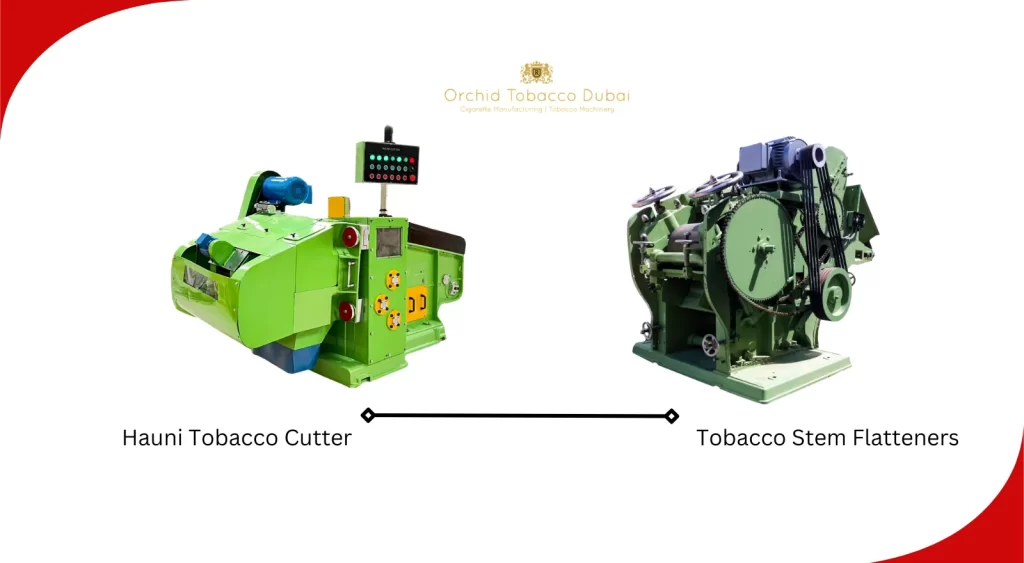
Among the models on the market, the Hauni Tobacco Cutter KT-400 stands out for reliability at scale, widely used across cigarette factories for consistent, high-quality shred output.
The KT-400 is a purpose-built cutting machine designed around efficiency and consistency, with a robust build that holds up under continuous production demands. (Check Cigarette Wrapping Machines)
The KT-400 runs five precision knives, engineered to hold their edge over extended production periods, which is what actually keeps shred consistency stable without frequent knife changes cutting into uptime.
Jaw operation runs on pneumatic cylinders, delivering the force needed to cut through tobacco leaf cleanly and consistently rather than relying on mechanical pressure alone.
Cut size is regulated by a PLC drive on a brass bend slat, giving operators precise, repeatable control over shred width, the exact variable that determines whether the finished cut meets spec batch after batch.
The KT-400’s core job is straightforward but critical: cutting tobacco leaf into thin, uniform strips ready for blending and packing. The consistency it delivers is what actually lets every cigarette in a batch taste and burn the same way, rather than varying pack to pack.
Automating the cutting stage lets a factory process large tobacco volumes without the labor and time cost of manual shredding, freeing up staff for tasks automation can’t handle as well.
Precision knives paired with a controllable drive mechanism are what actually deliver uniform cut width across a full production run, which is the real driver of consistent burn and flavor from one cigarette to the next. (Check Cigarette Filter Making Machines)
A durable, reliable cutter reduces both maintenance cost and downtime, and consistent cuts directly reduce tobacco wastage, both of which show up as real savings over a full production year rather than a one-time gain.
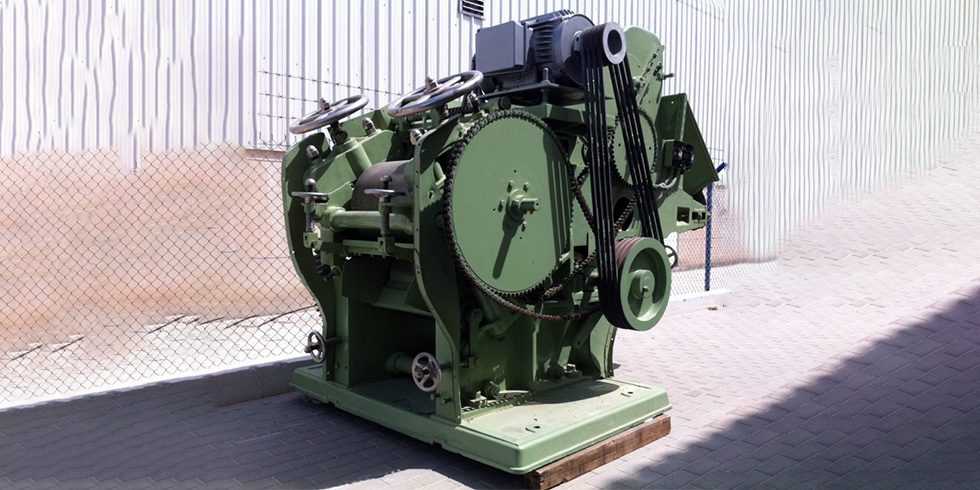
Tobacco stem flatteners handle a different but related problem: the stem running through a tobacco leaf is tougher and denser than the lamina around it, and left unprocessed, it doesn’t cut or blend the same way as the shredded leaf. Flattening the stem before cutting is what makes it possible to process alongside the lamina rather than treating it as separate waste material.
By flattening the tough stem structure, these machines allow stem material to be evenly distributed through the shredded tobacco rather than sitting as an inconsistent, harder-burning component within the blend. The result is a more uniform final product, both in texture and in how it burns. (Check Mark 8 Cigarette Making Machine)
Stem flattening reduces wastage by turning a component that would otherwise be discarded or under-utilized into usable, blendable material, while also improving overall blend consistency. That translates directly into both a quality improvement and a real reduction in raw material waste. (Check Mark 9 Cigarette Making Machine)
Both machines sit in primary processing, after curing and blending, before the tobacco reaches a cigarette maker. Getting shred width and stem consistency right at this stage is what determines whether the moisture and blend work done earlier actually holds up once tobacco reaches rod formation. A cigarette maker running at 8,000 cigarettes per minute can’t correct for inconsistent shred coming in from an earlier stage, which is why cutting and stem flattening quality has an outsized effect on final product consistency relative to how much attention this stage usually gets.
Cutting machines see constant mechanical wear by nature of the job, knives, cylinders, and drive components are all cycling continuously under load, which makes preventive maintenance a bigger factor in output consistency than most buyers initially plan for. Knife sharpness degrades gradually rather than failing outright, so shred quality is a more reliable early warning sign than waiting for a knife to visibly dull. Pneumatic cylinders are the other common wear point: a cylinder losing pressure shows up first as inconsistent jaw force, which translates into uneven cutting before it becomes an obvious mechanical fault. Building a replacement schedule around these gradual failure patterns, rather than reacting only after a defect appears in finished product, is generally what keeps a cutting line holding spec over the long run.
Does cut width affect nicotine delivery, or just texture and burn rate?
Primarily burn rate and how the tobacco packs into the rod, which affects draw resistance. Nicotine content itself is set earlier, during blending and casing, but inconsistent cut width can still create batch-to-batch variation in how that nicotine is delivered during smoking.
Is a stem flattener always necessary, or only for certain tobacco types?
It depends on the leaf variety and how much stem material is being processed alongside the lamina. Manufacturers using a higher proportion of whole-leaf tobacco generally get more value from stem flattening than those working primarily with pre-processed lamina.
How often do cutting knives on a machine like the KT-400 need replacing?
There’s no fixed universal interval, but a drop in cut uniformity, ragged rather than clean shred edges, is usually the first practical sign a knife needs replacing, generally well before the blade shows obvious visible wear.
What’s the first sign that a pneumatic cylinder is starting to wear out?
Inconsistent jaw pressure is typically the earliest indicator, showing up as uneven cutting force across the tobacco before there’s any obvious mechanical symptom on the cylinder itself. Tracking shred consistency over time catches this earlier than waiting for a visible fault.
Precision and efficiency define good cigarette manufacturing, and tobacco cutting machines like the Hauni KT-400 are a genuinely underappreciated part of where that precision actually comes from. (View Cigarette Soft Cup Packing Machines)
Tobacco stem flatteners round out the same production stage, turning stem material that would otherwise be inconsistent or wasted into a usable part of a uniform blend. Together, these two machine types have more influence over final product consistency than their relatively low profile in most production overviews would suggest.
For tobacco industry professionals and factory owners, understanding what’s actually happening at this stage, not just that it “improves quality,” is what makes it possible to diagnose downstream consistency issues correctly instead of assuming the problem sits somewhere else on the line. (View Our Cigarette Machinery Spare Parts)
For the full equipment picture, explore Orchid Tobacco’s complete range of Cigarette Manufacturing Machines.