A batch of tobacco can look perfectly fine to the eye and still be wrong in ways that only show up once it’s blended, cut, and running through a cigarette maker at full speed. Moisture slightly off target.
Nicotine content outside the expected range for that grade. A trace of foreign material that a camera catches but a quick visual pass wouldn’t. Tobacco quality inspection exists precisely to catch these issues before they become expensive problems on a production line, and it relies on a broader set of methods than most people outside the industry would expect.
This article covers the main categories of tobacco quality inspection methods used across the industry, from basic visual grading to chemical analysis and automated contaminant detection.
Quality inspection isn’t a single test. It’s a set of distinct checks applied at different points in the tobacco supply chain, from incoming raw leaf through in-process production, each looking for a different kind of problem.
Broadly, inspection methods fall into a few categories: visual and physical grading, moisture testing, chemical composition analysis, and foreign matter or contaminant detection. A manufacturer with a mature quality process runs some combination of all four rather than relying on any single check.
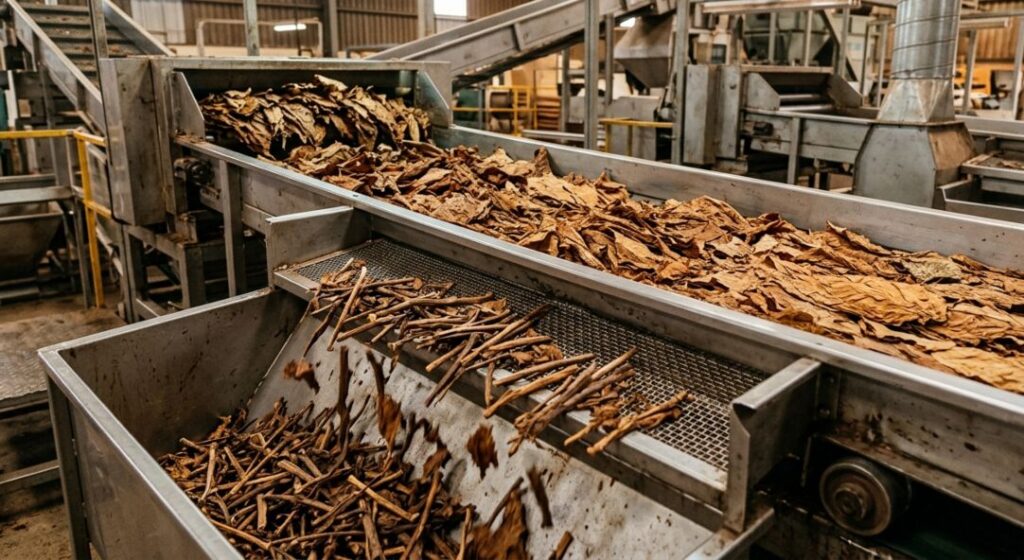
The most traditional form of tobacco inspection is visual grading, assessing leaf color, size, texture, and physical condition, including damage, blemishes, or discoloration that indicates disease, poor curing, or storage issues. This has historically been done by trained graders working by eye, and experienced graders remain genuinely difficult to replace for nuanced quality calls.
Increasingly, though, optical and camera-based grading systems are used alongside manual grading to add consistency and speed, particularly for high-volume sorting where human fatigue and subjectivity naturally introduce variation across a long shift.
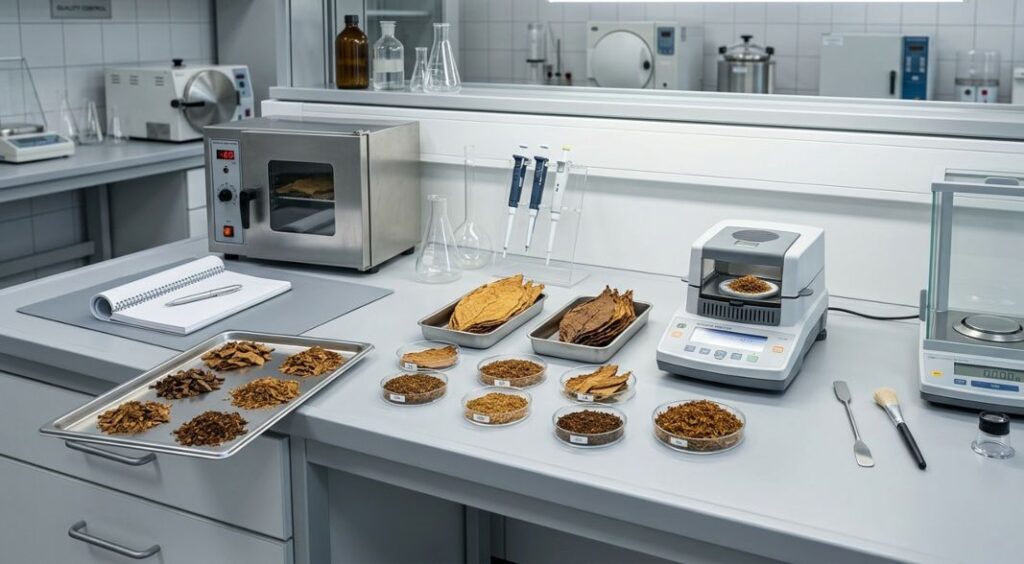
Moisture is one of the most consequential variables in tobacco quality, affecting everything from storage stability to how leaf behaves during threshing and cutting. Testing is typically done using oven-drying reference methods, where a sample’s weight loss after controlled heating gives a precise moisture percentage, or with handheld moisture meters for faster, non-destructive readings on the processing floor.
Moisture testing happens at multiple points, on incoming leaf, after redrying, and again before a batch enters cutting or blending, since moisture shifts at any of these stages if storage conditions aren’t tightly controlled.
Beyond physical characteristics, tobacco quality is defined chemically. Nicotine content, sugar content, and nitrate levels are the primary compounds manufacturers test for, since all three significantly affect flavor, smoke characteristics, and how a leaf performs within a blend.
Traditional wet chemistry lab analysis remains the reference method for precise results, but near-infrared spectroscopy, commonly abbreviated NIRS, has become widely used across the industry for rapid, non-destructive testing that can screen large volumes of incoming leaf far faster than sending every sample to a full lab analysis.
Non-tobacco related material, often shortened to NTRM in industry terminology, covers anything that shouldn’t be present in a tobacco lot, stray plastic, string, paper, metal fragments, or insect matter picked up during harvesting, curing, or storage.
Manufacturers use a layered approach to catch this: metal detection systems for ferrous and non-ferrous contaminants, X-ray inspection for denser foreign objects that visual methods miss, and increasingly, optical sorting systems using cameras and sometimes AI-assisted image recognition to flag and remove foreign material at high speed during processing.
Tobacco held in storage for extended periods is checked periodically for mold and microbial growth, particularly in cases where moisture control during storage wasn’t as tightly managed as it should have been. This kind of inspection matters most for material held over longer storage cycles rather than tobacco moving quickly from processing into production.
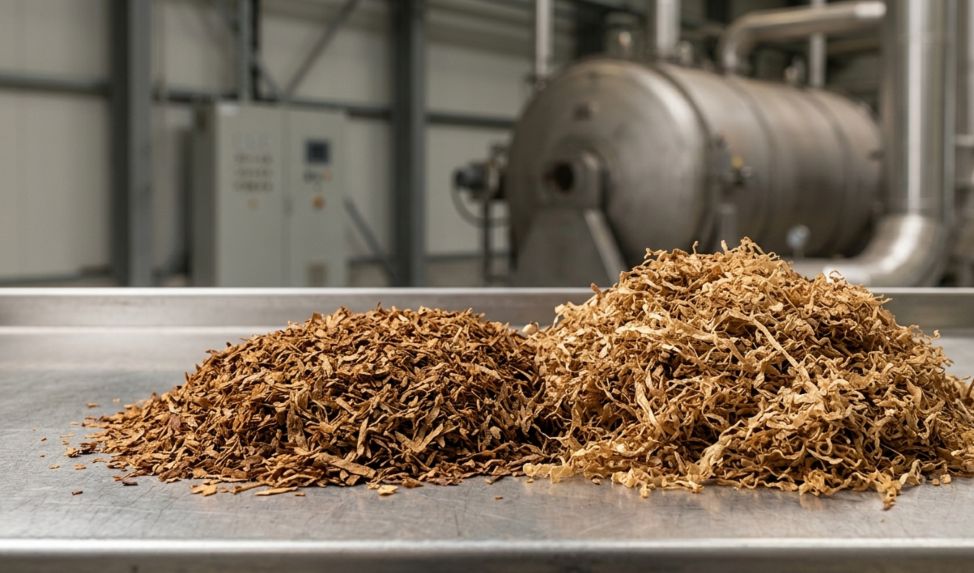
Inspection doesn’t stop once raw leaf clears initial checks. Statistical sampling continues through threshing, grading, and cutting, catching drift or inconsistency introduced by the processing equipment itself rather than by the original leaf. This kind of ongoing sampling is what connects raw material quality to the consistency covered in our guide to tobacco lamina processing, since threshing and grading quality directly depends on inspection catching problems early rather than after a full batch has already been processed.
Much of the methodology behind tobacco quality testing, from moisture determination to chemical analysis protocols, is standardized through CORESTA Recommended Methods, giving manufacturers and buyers a common reference framework for comparing results across different labs, regions, and suppliers. Working to recognized standard methods matters particularly for manufacturers supplying multiple export markets, where buyers and regulators may expect documentation in a specific, comparable format.
For companies evaluating a manufacturer, whether for standard supply or for a private label or contract manufacturing arrangement, the depth of a factory’s quality inspection process is one of the clearer indicators of how consistent the finished product is likely to be. A manufacturer running only basic visual grading is working with meaningfully less information than one combining visual, chemical, and automated contaminant detection, and that difference tends to show up eventually in blend consistency and finished product quality.
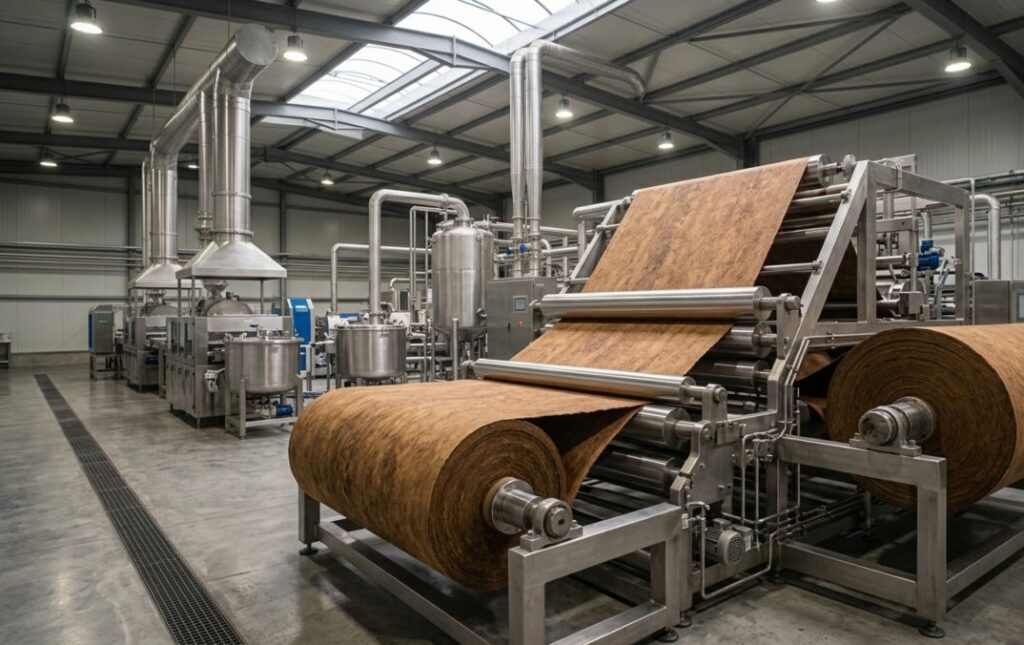
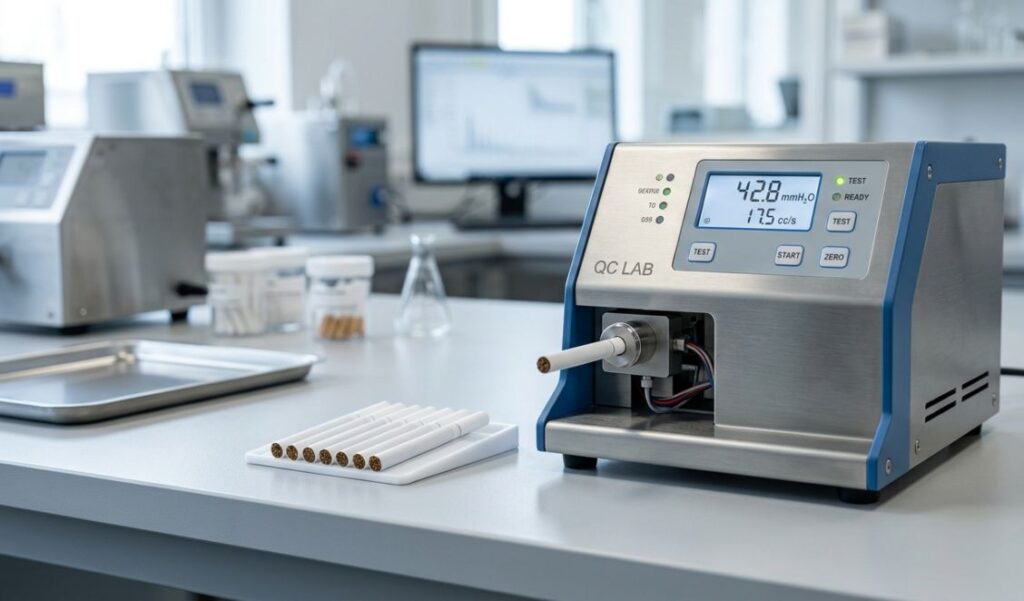
Quality inspection threads through nearly every stage covered elsewhere on this site, from raw lamina grading through expansion and reconstituted sheet processing, all the way to the finished product testing covered in our guides to draw resistance, circumference, and ventilation testing. A full view of how these production stages connect on the machinery side is available on our tobacco machinery page.
Tobacco quality inspection isn’t one test but a layered system, visual grading, moisture testing, chemical analysis, and contaminant detection working together to catch problems that no single method would reliably find on its own. The manufacturers who run the most rigorous version of this system tend to be the ones producing the most consistent finished cigarettes, which makes inspection depth a genuinely useful thing to ask about when evaluating any tobacco supplier or manufacturing partner.

We specialize in the provision of Tobacco Machinery. Our expertise encompasses not only the trading of machinery but also extends to being a dedicated supplier. This specialization is enriched by our comprehensive solutions tailored for emerging Cigarette Companies. What sets us apart is our ability to offer firsthand insights through our active Cigarette Manufacturing operation in the UAE.